
บทนำ
ชุดทำงาน plays a much bigger role than simply making employees look professional. In many workplaces, the right workwear can help protect workers from injury, improve comfort during long working hours, and support better productivity. Whether employees work in a factory, warehouse, construction site, laboratory, cold storage facility, or outdoor environment, suitable workwear helps them perform their tasks with more confidence and safety.
For companies, workwear is also part of brand identity. A well-designed uniform can make a team look organized and reliable. It can also help customers, managers, and visitors quickly identify staff members. In industries where safety risks are high, workwear becomes even more important because it may protect workers from heat, chemicals, low visibility, cold weather, electric hazards, or other dangerous conditions.
Different jobs require different types of workwear. A warehouse worker may need durable trousers and a comfortable jacket. A road construction worker may need high-visibility clothing. A welder may need flame-resistant and heat-resistant garments. A worker in cold storage may need insulated workwear that protects against low temperatures. This is why businesses should understand the main categories of workwear before making purchasing decisions.
In this guide, we will look at the top 6 workwear types that keep employees safe and productive. We will also explain how to choose a reliable workwear supplier and why customization options such as fabric, style, size, logo, and packaging matter for businesses.
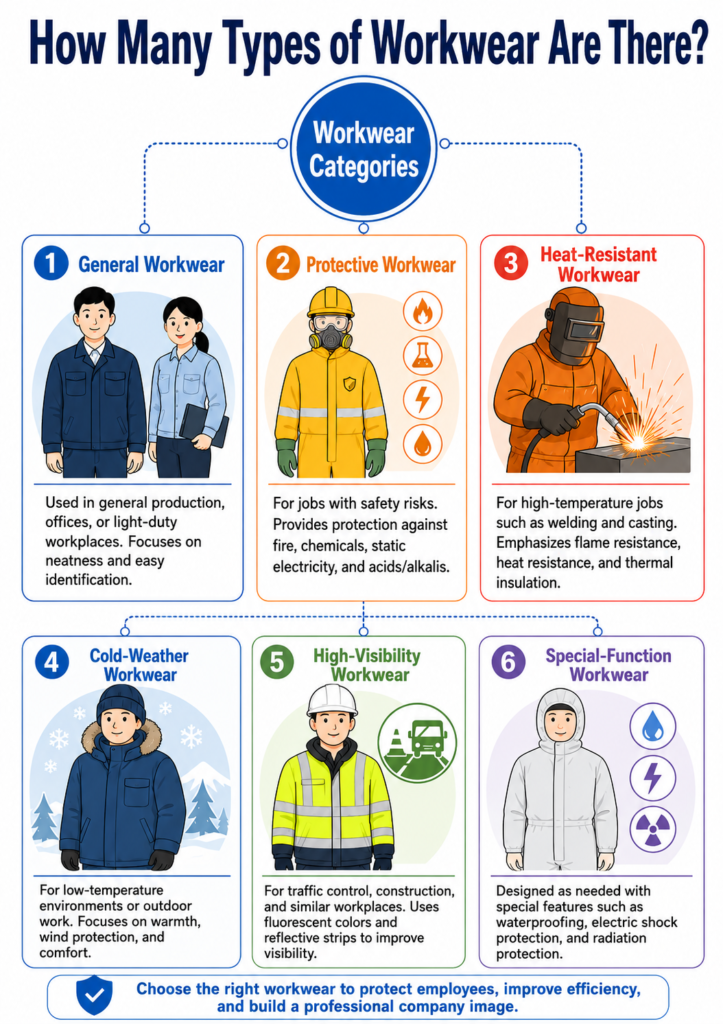
1. General Workwear
General workwear is one of the most common types of workwear used across different industries. It is suitable for daily work environments where employees need comfortable, durable, and professional clothing. This type of workwear is often used in factories, warehouses, workshops, offices, logistics companies, maintenance teams, and light-duty industrial workplaces.
General workwear usually includes work shirts, jackets, trousers, coveralls, vests, and uniforms. The main purpose is to provide a neat and consistent appearance while allowing employees to move comfortably. Good general workwear should be strong enough for daily use, easy to clean, and comfortable enough for long shifts.
Fabric choice is important for general workwear. Cotton is soft and breathable, which makes it comfortable in warm environments. Polyester is durable, wrinkle-resistant, and easy to maintain. Cotton-polyester blended fabrics are widely used because they combine comfort and durability. Some companies may also choose stretch fabrics to improve flexibility, especially for workers who need to bend, lift, or move frequently.
General workwear can also help improve company image. When employees wear matching uniforms with the company logo, the workplace looks more organized. This can be useful in customer-facing businesses, factories with visitor inspections, and service teams that need a professional appearance. Branded workwear can also increase team identity and make employees feel more connected to the company.
Although general workwear may not provide advanced protection against specific hazards, it still supports workplace safety. Properly fitted clothing can reduce the risk of loose garments getting caught in machinery. Durable trousers and jackets can protect workers from minor scratches, dust, and dirt. For many companies, general workwear is the foundation of a practical employee uniform system.
2. Protective Workwear
Protective workwear is designed for workplaces where employees face safety risks. It provides protection against hazards such as fire, chemicals, static electricity, acids, alkalis, dust, oil, sparks, and other harmful materials. This type of workwear is essential in industries such as chemical processing, oil and gas, mining, laboratories, electronics manufacturing, power plants, and heavy industry.
The key feature of protective workwear is function. Unlike ordinary uniforms, protective workwear must be selected according to the actual risks of the job. For example, workers in chemical plants may need chemical-resistant coveralls. Employees in electronics manufacturing may need anti-static workwear to prevent static discharge. Workers exposed to flames or sparks may need flame-resistant clothing.
Protective workwear may include coveralls, jackets, trousers, lab coats, aprons, gloves, hoods, and full-body suits. Some garments are made with special coatings or treated fabrics to resist chemicals or reduce flammability. Others may have sealed seams, storm flaps, reinforced closures, or elastic cuffs to reduce exposure to hazardous substances.
Comfort should not be ignored when choosing protective workwear. If garments are too heavy, too hot, or too restrictive, workers may not wear them correctly. This can reduce protection and increase safety risks. A good protective workwear design should balance safety, breathability, movement, and durability.
Companies should also consider compliance and industry standards when purchasing protective workwear. Different countries and industries may have specific requirements for flame resistance, chemical protection, anti-static performance, or other protective functions. Businesses should work with suppliers who understand these requirements and can recommend suitable materials and garment structures.
Protective workwear is not just a cost. It is an investment in employee safety. When employees feel protected, they can focus better on their work. This helps reduce accidents, downtime, and compensation costs. In high-risk industries, choosing the right protective workwear is a necessary part of responsible management.
3. Heat-Resistant Workwear
Heat-resistant workwear is used in high-temperature environments. It is especially important for welding, casting, metalworking, glass manufacturing, steel production, foundries, and other jobs where workers may face heat, sparks, flames, hot surfaces, or molten materials.
Ordinary clothing is not suitable for these environments. Some regular fabrics may melt, burn, or transfer heat quickly to the skin. Heat-resistant workwear is designed to reduce these risks. It can help protect workers from burns, flame exposure, heat stress, and injuries caused by sparks or hot particles.
Common heat-resistant workwear includes flame-resistant jackets, trousers, coveralls, aprons, sleeves, gloves, and hoods. Welders may also need protective helmets, face shields, and insulated gloves. Workers near furnaces or molten metal may require heavier protective garments with better thermal insulation.
The fabric used in heat-resistant workwear is very important. Some materials are inherently flame-resistant, while others are treated to improve flame resistance. The right choice depends on the work environment, heat level, exposure time, and specific hazards. In some jobs, workers may need protection from short contact with flames. In other jobs, they may need protection from radiant heat for longer periods.
Mobility is another important factor. Workers in welding or metal processing often need to bend, reach, and handle tools. If the workwear is too stiff or bulky, it may affect their movement and reduce productivity. A well-designed heat-resistant garment should provide protection while still allowing practical movement.
Heat-resistant workwear should also be maintained properly. Damaged, torn, or heavily contaminated garments may lose protective performance. Companies should inspect these garments regularly and replace them when necessary. Training workers on how to wear and care for heat-resistant workwear can improve safety outcomes.
For businesses in high-temperature industries, heat-resistant workwear is one of the most critical forms of protection. It helps reduce serious injuries and supports safer, more efficient operations.
4. Cold-Weather Workwear
Cold-weather workwear is designed for employees who work in low-temperature conditions or outdoor environments. It is commonly used in construction, road maintenance, logistics, agriculture, cold storage, shipping, outdoor security, and winter industrial operations.
Cold environments can reduce worker comfort and productivity. They can also create serious health risks if employees are not properly protected. Low temperatures, wind, rain, snow, and moisture can increase the risk of cold stress, numbness, reduced movement, and fatigue. Suitable cold-weather workwear helps workers stay warm, dry, and active.
Typical cold-weather workwear includes insulated jackets, padded coats, thermal trousers, coveralls, windproof outerwear, waterproof garments, gloves, hats, and neck protection. Some garments use multiple layers to provide warmth while allowing moisture to escape. A good design should keep the body warm without making the worker feel too heavy or restricted.
Insulation is one of the most important features. However, warmth alone is not enough. Cold-weather workwear should also offer wind resistance, water resistance, breathability, and durability. Outdoor workers may face changing weather conditions, so the workwear must perform in real job situations.
Fit is also important. If cold-weather workwear is too tight, it may limit movement and reduce insulation. If it is too loose, cold air may enter and reduce warmth. The garment should allow workers to move, lift, climb, and operate equipment comfortably.
High-visibility features can also be added to cold-weather workwear. Many outdoor workers operate in low-light winter conditions, early mornings, or roadside environments. Reflective strips and bright colors can improve visibility and reduce accident risks.
For companies, providing suitable cold-weather workwear shows care for employee well-being. Comfortable workers are more focused, less fatigued, and more productive. In cold environments, the right workwear is not just about comfort. It is also about safety and performance.
5. High-Visibility Workwear
High-visibility workwear is designed to make workers easier to see. It is widely used in construction, road work, traffic control, logistics, ports, airports, railways, emergency response, and outdoor industrial sites. In any workplace where vehicles, machinery, or low-light conditions are present, visibility is a key safety factor.
High-visibility workwear usually uses bright fluorescent colors such as yellow, orange, or green. These colors help workers stand out during the day. Reflective strips are also added to improve visibility at night or in poor lighting. Some garments are designed with reflective tape around the arms, legs, chest, and back to provide visibility from multiple directions.
Common high-visibility workwear includes safety vests, jackets, trousers, coveralls, rainwear, and winter coats. The right garment depends on the working environment. A traffic worker may need a lightweight reflective vest in warm weather. A road construction worker in winter may need an insulated high-visibility jacket. A logistics worker may need durable reflective workwear that supports frequent movement.
High-visibility workwear can reduce accidents by helping drivers and equipment operators notice workers earlier. This is especially important near roads, loading areas, warehouses, and construction machinery. Poor visibility can lead to serious injuries, so high-visibility clothing is a basic safety requirement in many industries.
Comfort and durability should also be considered. Some workers wear high-visibility workwear for long shifts. The garment should be breathable, practical, and suitable for the season. Reflective materials should remain effective after repeated washing, and bright colors should not fade too quickly.
Companies can also customize high-visibility workwear with logos, department names, or specific color combinations. This helps combine safety with brand identity. For many businesses, high-visibility workwear is one of the easiest ways to improve workplace safety while maintaining a professional appearance.
6. Special-Function Workwear
Special-function workwear is designed for jobs with specific technical requirements. It may provide features such as waterproofing, electric shock protection, radiation protection, oil resistance, dust prevention, cleanroom protection, antibacterial treatment, or other specialized functions.
This type of workwear is used in many industries. Electricians may need insulated clothing and accessories to reduce electrical risks. Cleanroom workers may need dust-free garments to prevent contamination. Workers in wet environments may need waterproof jackets and trousers. Laboratory and medical workers may need protective clothing that helps control exposure to biological or chemical substances. Some specialized environments may require radiation-protective or anti-contamination garments.
Special-function workwear must be selected carefully. The first step is to identify the exact working conditions. For example, waterproof workwear for outdoor rain may not be suitable for chemical splash protection. Anti-static workwear may not provide flame resistance unless it is specifically designed for both functions. Each feature must match the real hazard.
Material quality is especially important in special-function workwear. The fabric, coating, seams, zippers, closures, and overall garment design all affect performance. Poor-quality garments may look suitable but fail in real working conditions. This can create serious safety risks.
Customization is often needed for special-function workwear. Different teams may require different garment structures, pocket designs, reflective details, sizes, colors, or protective levels. A reliable supplier should be able to help companies choose suitable materials and adjust designs based on workplace needs.
Special-function workwear is often more technical than ordinary uniforms. Companies should not choose it only based on appearance or price. They should consider safety performance, comfort, durability, maintenance, and compliance. When selected correctly, special-function workwear helps employees work safely in demanding environments.
How to Choose the Right Workwear for Your Business
Choosing the right workwear begins with understanding the workplace. Companies should first identify the environment where employees work. Is it hot, cold, wet, dusty, dark, or exposed to chemicals? Are workers close to vehicles, machines, flames, electricity, or sharp materials? The answers to these questions help determine which type of workwear is needed.
The second factor is comfort. Employees wear workwear for many hours each day. If the garment is uncomfortable, too heavy, too tight, or not breathable, it may affect productivity. Comfortable workwear helps workers stay focused and move naturally.
The third factor is durability. Workwear must handle repeated use, washing, movement, and contact with workplace materials. Strong stitching, high-quality fabric, reinforced stress points, and practical pocket designs can extend garment life.
The fourth factor is fit. Poorly fitted workwear can create safety and comfort problems. Loose clothing may catch on equipment. Tight clothing may limit movement. Companies should offer different sizes and consider customized sizing when needed.
The fifth factor is branding. Workwear can carry company logos, colors, slogans, or department names. Branded workwear improves recognition and creates a more professional image. It also helps build team identity.
Finally, companies should consider long-term value instead of only the lowest price. Cheap workwear may wear out quickly or fail to provide proper protection. High-quality workwear may cost more at first, but it often provides better safety, comfort, durability, and brand value.
How to Choose a Reliable Workwear Supplier
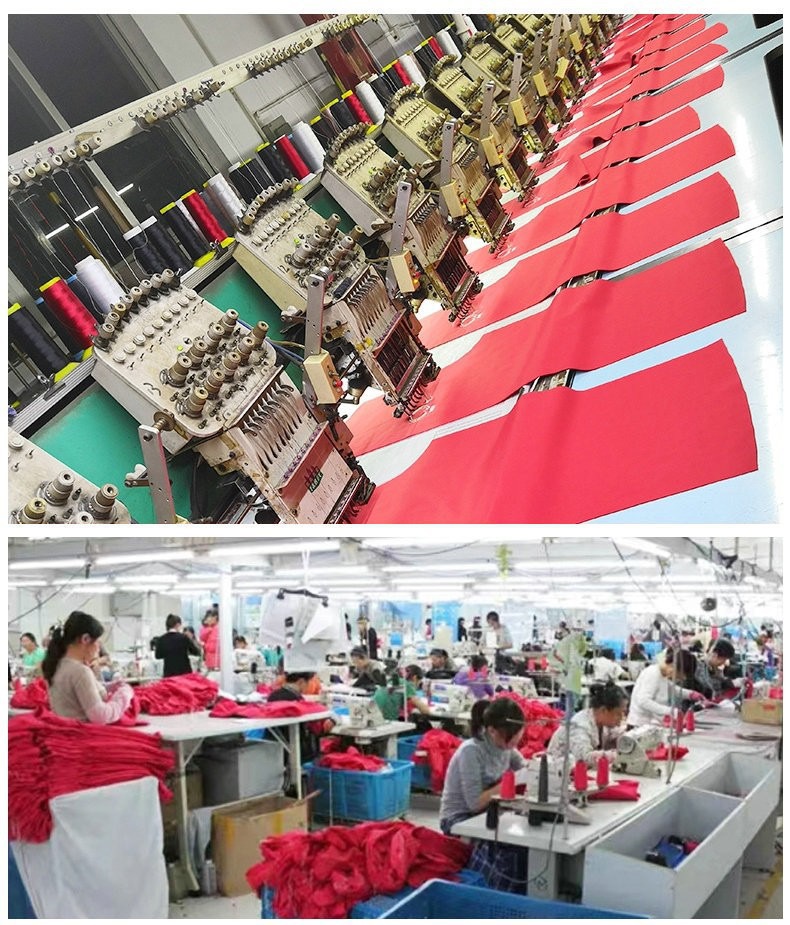
A reliable workwear supplier can help a company save time, reduce quality risks, and create garments that meet real workplace needs. When choosing a supplier, businesses should look beyond price and consider the supplier’s production ability, customization options, material quality, communication, and delivery performance.
First, a good supplier should offer suitable fabric options. Different industries need different materials. Some companies need breathable cotton blends. Some need flame-resistant fabrics. Some need waterproof coatings or high-visibility materials. A supplier with strong fabric customization ability can help businesses match workwear to actual working conditions.
Second, a reliable supplier should support customized styles. Workwear design is not only about appearance. It also affects movement, storage, safety, and comfort. Pocket placement, zipper quality, sleeve design, collar structure, reflective tape position, and reinforcement areas can all influence daily use.
Third, size customization is important. Workers have different body types, and one standard size range may not fit everyone. Proper sizing improves comfort and reduces safety risks. A supplier that supports custom sizes can help companies provide better uniforms for their teams.
Fourth, logo customization helps businesses strengthen brand identity. Logos can be added through embroidery, printing, patches, or other methods depending on the garment material and design. A professional supplier should recommend the right logo method based on the fabric and usage environment.
Fifth, packaging customization can support brand presentation and distribution. Custom packaging is useful for companies that sell workwear, distribute uniforms to multiple branches, or want a more professional delivery experience.
NINGBO TOPRISE supports customization for workwear, including custom fabrics, styles, sizes, logos, packaging, and other details. This flexibility allows businesses to create workwear that fits their working environment, brand image, and employee needs. Whether a company needs general uniforms, protective garments, high-visibility clothing, or special-function workwear, customization can make the final product more practical and professional.
A reliable supplier should also communicate clearly. They should understand your requirements, provide practical suggestions, and confirm details before production. Sampling is also important because it allows businesses to check fabric, fit, color, logo effect, and workmanship before placing a larger order.
Delivery reliability matters as well. Workwear is often needed for new employees, seasonal changes, safety updates, or project launches. Delays can affect operations. A professional supplier should provide clear timelines and stable production capacity.
In short, the right supplier should not only produce garments. They should help you solve workwear problems. They should understand safety, comfort, customization, and brand needs.
Why Customized Workwear Matters
Customized workwear gives companies more control over function, comfort, and image. Instead of buying standard garments that may not fully match workplace needs, businesses can choose specific fabrics, colors, sizes, designs, and logos.
Custom fabric selection helps improve performance. For example, outdoor teams may need water-resistant fabric. Factory workers may need durable blended fabric. Road workers may need fluorescent fabric with reflective tape. Cold storage workers may need insulated materials. Different fabrics create different results.
Custom style design helps employees work more efficiently. Workers who carry tools may need extra pockets. Employees who bend or climb may need flexible designs. Workers exposed to low visibility may need reflective details. A custom style can be built around the job itself.
Custom sizing improves employee comfort. Better fit means better movement and fewer distractions. It also helps employees look more professional.
Custom logos and packaging improve brand presentation. Workwear with a clear logo helps customers identify your company. It also makes employees look unified. For companies that value brand image, customized workwear is a practical marketing tool as well as a workplace necessity.
สรุป
Workwear is an essential part of workplace safety, productivity, and professional image. The right workwear helps protect employees, supports daily performance, and creates a more organized company appearance. Different industries require different types of workwear, so businesses should understand the main categories before making a purchase.
The top 6 workwear types include general workwear, protective workwear, heat-resistant workwear, cold-weather workwear, high-visibility workwear, and special-function workwear. General workwear is suitable for daily use and company identity. Protective workwear helps reduce risks from chemicals, fire, static electricity, and other hazards. Heat-resistant workwear protects workers in high-temperature environments. Cold-weather workwear keeps employees warm and comfortable in low-temperature conditions. High-visibility workwear improves safety in traffic, construction, and outdoor workplaces. Special-function workwear meets specific industry needs such as waterproofing, electric shock protection, cleanroom protection, or radiation protection.
Choosing the right workwear is not only about selecting a garment. It is about understanding the job, the working environment, employee comfort, safety requirements, durability, and brand identity. Companies should choose workwear that fits real workplace conditions and supports employees throughout their daily tasks.
A reliable supplier is also important. Good suppliers provide quality materials, stable production, practical customization, and clear communication. NINGBO TOPRISE supports custom fabrics, styles, sizes, logos, packaging, and other workwear details, helping businesses create garments that match their safety needs and brand image.
Investing in high-quality workwear is a smart decision for any company that values employee safety and long-term productivity. When workers are properly protected and comfortably dressed, they can focus better, work more efficiently, and represent the company with confidence. The right workwear keeps employees safe, productive, and professional every day.


 Thai
Thai  English
  Russian
  Arabic
  Portuguese
  Japanese
  German
  Spanish
  Afrikaans
  Greek
Greek  Italian
  French