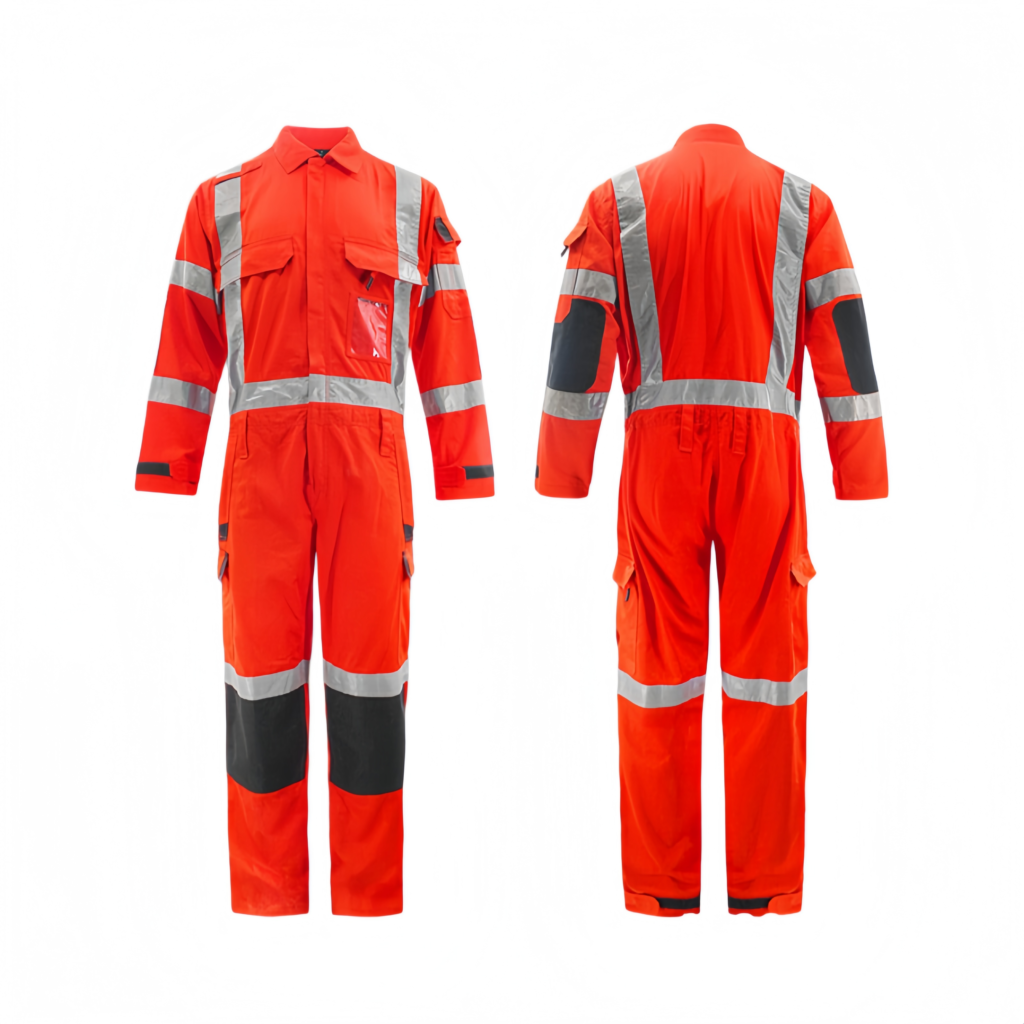
A reflective work coverall is a one-piece protective workwear garment designed for workers who need full-body coverage, better visibility, and practical daily protection. It usually combines a jacket and pants into one garment, with long sleeves, front zipper or buttons, chest pockets, side pockets, reflective tape, and sometimes reinforced panels.
Compared with bib pants or ordinary work trousers, a coverall protects more areas of the body. It is useful when workers face dust, dirt, wind, light splash, machine contact, or outdoor working conditions. For companies, reflective coveralls can also create a cleaner and more unified team image.
What Is a Reflective Work Coverall?
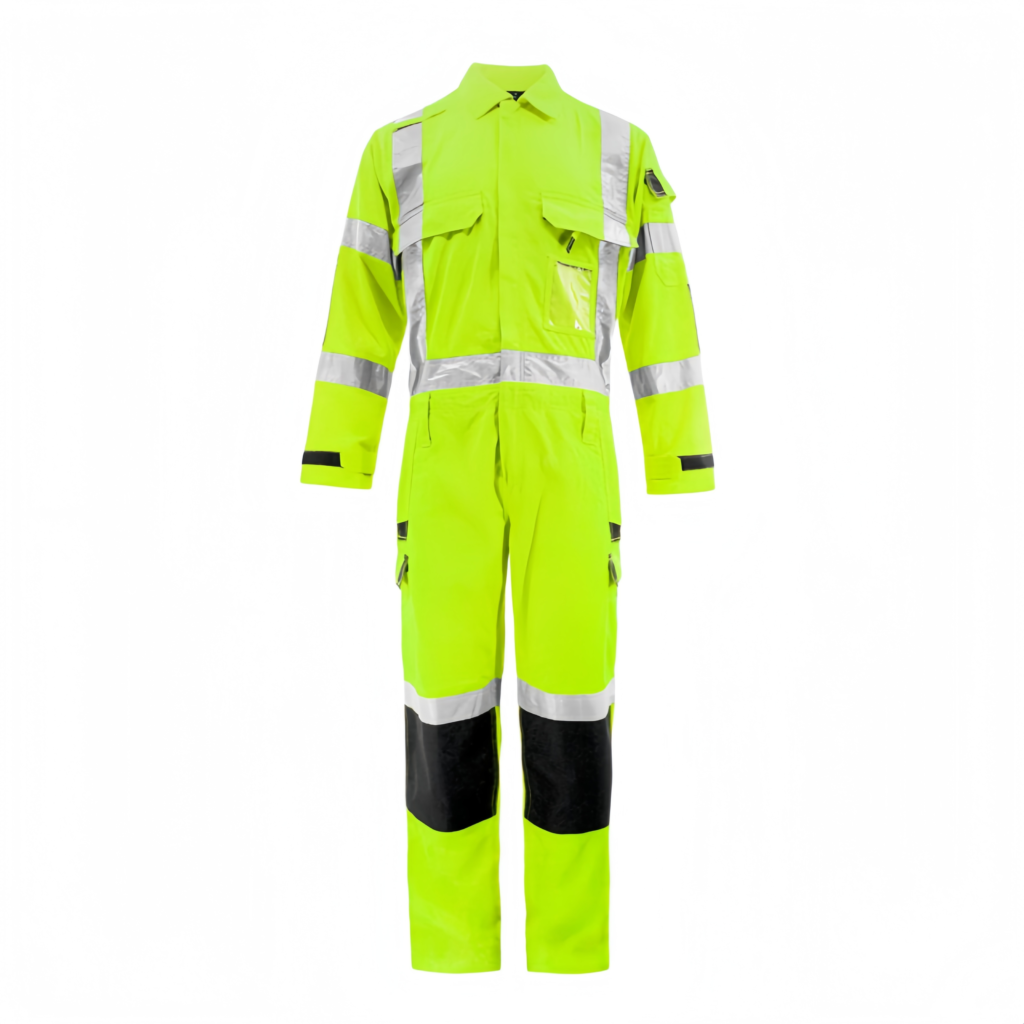
A reflective work coverall is a full-body work uniform with reflective strips added to improve worker visibility. It is commonly made in high-visibility orange, yellow, lime, navy, royal blue, or mixed contrast colors.
The reflective tape is usually placed on the shoulders, chest, waist, arms, and legs. This layout helps workers become easier to see from different angles when light shines on the garment.
Main Features of Reflective Work Coverall
A practical reflective coverall may include a front zipper, storm flap, chest pockets, tool pockets, elastic waist, adjustable cuffs, knee reinforcement, contrast color fabric, reflective tape, and logo placement.
Some designs focus on safety visibility. Some focus on durability. Some focus on comfort for long working hours. Buyers should choose the structure according to the real job site.
Application Areas of Reflective Work Coverall
Reflective coveralls are suitable for many industries where workers need body protection and better visibility at the same time.
Road Construction and Traffic Work
Road workers, highway maintenance teams, and traffic crews often work near moving vehicles. Reflective coveralls help make workers more visible during early morning, evening, night shifts, and poor weather.
Oil, Gas, and Energy Work
Workers in oil fields, gas stations, energy plants, and industrial maintenance areas may need coveralls with reflective tape, oil-resistant fabric, or flame-retardant fabric. The exact fabric should match the workplace risk.
Factory and Industrial Maintenance
In factories, workers often face dust, oil, machine parts, and frequent movement. A reflective work coverall gives full-body coverage and makes workers easier to identify inside large industrial spaces.
Railway, Port, and Airport Ground Operations
Railway teams, port workers, and airport ground staff often work around vehicles, machines, and large open areas. Reflective tape helps improve visibility from a distance.
Emergency Repair and Utility Services
Electricity, water, telecom, and public maintenance workers often work outdoors or near roads. Reflective coveralls can support safer and more professional field operations.
How to Choose the Right Fabric for Reflective Work Coverall
Fabric is one of the most important decisions when buying coveralls. It affects comfort, durability, color stability, washing performance, and worker protection.
Common options include 80% polyester 20% cotton, 65% polyester 35% cotton, 100% cotton, and canvas fabric.
Regular Fabric Comparison
| Tipo de tejido | Main Advantages | Possible Limitations | Aplicaciones adecuadas |
|---|---|---|---|
| 80% Polyester 20% Cotton | Durable, quick-drying, wrinkle-resistant, stable color, competitive cost | Less breathable than cotton-rich fabric | Factory uniforms, logistics, general industrial work |
| 65% Polyester 35% Cotton | Balanced comfort and strength, better breathability, good daily performance | Slightly higher cost than 80/20 fabric | Construction, maintenance, road work, utility teams |
| 100% Algodón | Soft, breathable, comfortable for warm environments | Easier to shrink, wrinkles more, dries slower | Light outdoor work, warm weather, comfort-focused jobs |
| Canvas Fabric | Heavy-duty, abrasion-resistant, strong structure | Heavier and less flexible than regular fabric | Mechanical repair, rugged work, heavy-duty industrial use |
Practical Fabric Advice
For most regular reflective coverall orders, 65% polyester 35% cotton is a balanced choice. It gives good comfort and reliable durability.
For price-sensitive bulk orders, 80% polyester 20% cotton is practical. For heavy-duty work, canvas fabric is more suitable. For warm working environments, 100% cotton may feel more comfortable.
Special Fabric Options for Reflective Work Coverall
Some workplaces require more than normal durability. If workers face oil, chemicals, sparks, heat, or flame, special fabric should be selected.
Protective Fabric Comparison
| Special Fabric Type | Main Function | Suitable Workplace | Selection Notes |
|---|---|---|---|
| Oil-Resistant Fabric | Helps reduce oil penetration and makes stains easier to clean | Auto repair, machinery maintenance, petroleum-related work | Suitable when workers often contact grease, lubricants, or machine oil |
| Acid and Alkali Resistant Fabric | Helps protect against certain chemical splashes | Chemical plants, battery factories, laboratories, industrial cleaning | Choose according to the actual chemical type and exposure level |
| Tejido ignífugo | Helps reduce flame spread near sparks, heat, or flame risk | Welding, electrical work, metal processing, oil and gas work | Ask for fabric performance details and washing durability before ordering |
| Water-Repellent Fabric | Helps resist light rain and liquid splash | Outdoor repair, road work, field service, logistics | Useful for outdoor work, but not equal to fully waterproof clothing |
How to Match Special Fabric with the Job
Buyers should first identify the main workplace hazard. If workers mainly face dirt and abrasion, regular polyester-cotton or canvas fabric may be enough. If the job involves oil, acid, alkali, sparks, or flame, protective fabric becomes more important.
For safety-related coveralls, buyers should confirm fabric composition, fabric weight, function, washing instructions, and available test information before production.
Benefits of Adding Reflective Tape to Work Coveralls
Reflective tape is a key part of reflective workwear. It improves visibility when light hits the garment, especially in low-light areas.
Why Reflective Tape Is Useful
Reflective tape helps workers become easier to notice under vehicle headlights, warehouse lights, site lamps, and machine lighting. It is especially helpful for night shifts, road work, tunnel work, loading areas, port operations, and emergency maintenance.
Reflective tape also makes uniforms look more professional. For company teams, it helps workers look organized and easier to identify.
Sewn Reflective Tape vs Heat Transfer Reflective Tape
| Reflective Tape Method | Ventajas | Possible Limitations | Suitable Use |
|---|---|---|---|
| Sewn Reflective Tape | Strong attachment, durable for heavy-duty use, suitable for thicker fabrics | Visible stitching; sewing quality must be controlled | Road work coveralls, canvas coveralls, industrial uniforms |
| Heat Transfer Reflective Tape | Smooth surface, clean look, lightweight feel, no stitch holes | May be affected by high heat, poor bonding, or incorrect washing | Lightweight coveralls, modern designs, polyester-cotton garments |
Which Reflective Tape Method Is Better?
For heavy-duty reflective work coveralls, sewn reflective tape is usually more reliable. It performs well on thicker fabrics and can handle frequent movement.
For lightweight coveralls or cleaner modern styles, heat transfer reflective tape can be a good option. The final choice should depend on fabric weight, washing frequency, appearance requirements, and target price.
How to Choose a Reliable Custom Manufacturer
A reliable manufacturer should understand workwear structure, fabric performance, reflective tape placement, size fitting, and export requirements. Coveralls are more complex than regular pants because the upper body and lower body must fit well together.
Key Points to Check
| Selection Point | Why It Matters |
|---|---|
| Coverall Production Experience | Experienced factories understand sleeve fit, waist comfort, zipper structure, and movement needs |
| Fabric Selection Ability | A good supplier should offer regular fabrics and protective fabric options |
| Calidad de la cinta reflectante | Tape quality affects appearance, visibility, and washing performance |
| Pattern and Size Support | Correct patterns reduce pulling, tightness, and movement problems |
| Logo Customization | Embroidery, printing, woven labels, and heat transfer logos support brand identity |
| Sample Service | Samples help confirm fabric, size, tape placement, and workmanship before bulk production |
| MOQ Flexibility | Clear MOQ helps buyers plan trial orders and company uniform projects |
| Packaging Customization | Custom polybags, labels, hangtags, and cartons improve brand presentation |
| Export Service | International buyers need support with packing, documents, shipping, and delivery planning |
Details to Confirm Before Ordering
Buyers should confirm fabric composition, fabric weight, color, size chart, zipper quality, pocket layout, reflective tape width, reflective tape position, logo method, packaging details, sample time, production time, and delivery method.
A reference sample, size chart, or technical drawing can make communication much clearer.
NINGBO TOPRISE for Custom Reflective Work Coverall Orders
NINGBO TOPRISE is a reliable manufacturer option for custom reflective coveralls. It supports small batch customization with a minimum order quantity from 500 pieces.
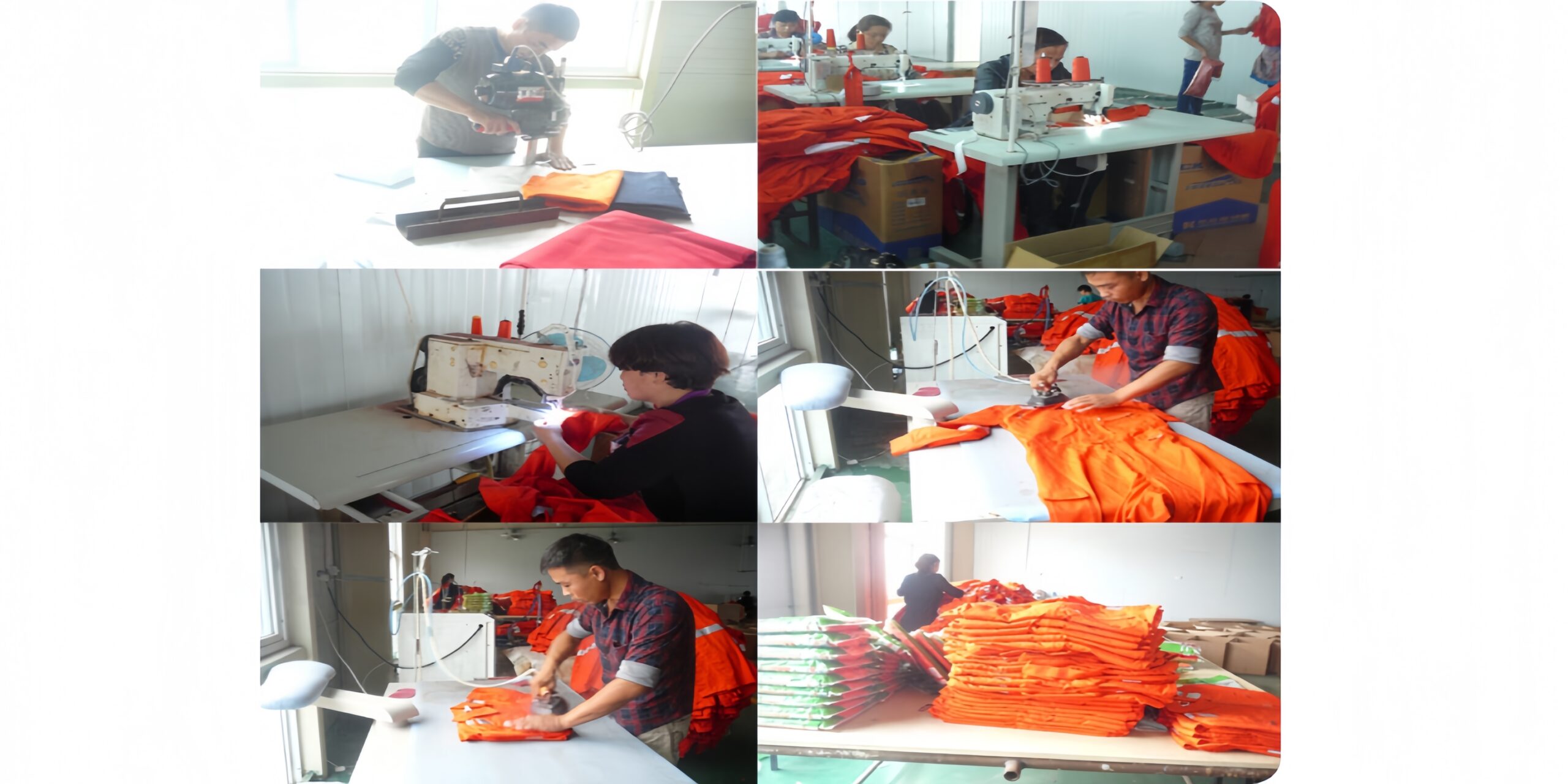
NINGBO TOPRISE can produce according to customers’ own styles, sizes, logos, and packaging requirements. Custom options may include fabric selection, color matching, reflective tape placement, pocket design, zipper type, cuff style, logo embroidery, logo printing, woven labels, hangtags, individual polybags, and carton packaging.
The company also supports door-to-door service. This helps international buyers simplify the purchasing process from production to final delivery.
Why Buyers Can Consider NINGBO TOPRISE
NINGBO TOPRISE is suitable for buyers who need flexible customization, 500-piece small batch support, practical coverall design, and export service. It can be a strong option for construction teams, road workers, industrial companies, utility workers, logistics teams, and safety workwear brands.
Daily Care Tips for Reflective Work Coverall
Correct care can extend the service life of a reflective coverall and help maintain its visibility and appearance.
Follow the Care Label
Workers should wash the coverall according to the care label. Different fabrics and special finishes may need different washing methods.
Close Zippers and Fasteners Before Washing
Before washing, workers should close zippers, buttons, hook-and-loop fasteners, and pocket flaps. This can reduce fabric damage and protect the garment shape.
Avoid Strong Bleach
Strong bleach may damage fluorescent color, reflective tape, printed logos, and protective finishes. Mild detergent is usually safer for daily washing.
Clean Oil and Dirt Early
Oil, mud, and chemical stains should be treated as early as possible. For oil-resistant or chemical-resistant fabrics, workers should follow the supplier’s cleaning instructions.
Protect the Reflective Tape
Reflective tape should not be ironed directly. High temperature may reduce reflective performance or damage heat transfer tape.
Dry and Store Correctly
Air drying is usually safer than high-temperature drying. Store the coverall in a dry and ventilated place. Long-term sunlight may reduce fabric brightness, especially on fluorescent colors.
Conclusión
A reflective work coverall is a practical full-body workwear solution for workers who need visibility, coverage, and durability. It is used in road construction, industrial maintenance, logistics, oil and gas, railway work, port operations, airport ground service, and utility repair.
The right fabric depends on the working environment. Polyester-cotton fabric is suitable for general use. Canvas is better for heavy-duty work. Cotton is comfortable for warm conditions. Oil-resistant, acid and alkali resistant, flame-retardant, or water-repellent fabrics should be selected when special protection is required.
Reflective tape improves visibility and professional appearance. Sewn reflective tape is suitable for heavy-duty garments, while heat transfer reflective tape provides a smoother and lighter look.
For custom reflective work coverall orders, NINGBO TOPRISE is a reliable choice. It supports small batch customization from 500 pieces, customer styles, custom sizes, logo customization, packaging customization, and door-to-door service. This makes it a practical partner for buyers who need professional custom workwear solutions.


 Spanish
  English
  Russian
  Arabic
  Portuguese
  Japanese
  German
  Afrikaans
  Greek
Greek  Italian
  Thai
Thai  French