Choosing the right workwear manufacturer is a critical decision for importers, wholesalers, distributors, and industrial clothing brands. A reliable manufacturing partner can help businesses maintain consistent product quality, manage purchasing costs, and establish a stable supply chain.
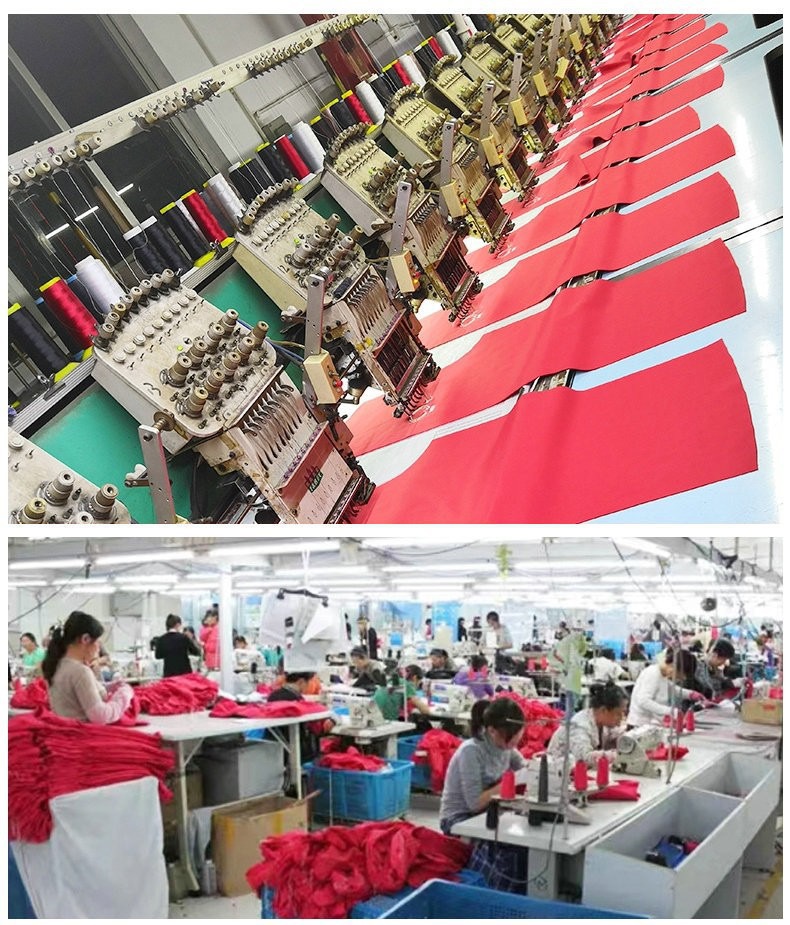
However, selecting a suitable workwear manufacturer involves much more than comparing prices. Product specialization, fabric quality, customization capabilities, minimum order quantities (MOQ), quality control, and delivery reliability all influence the success of a bulk order.
Whether you are sourcing industrial uniforms, work jackets, trousers, or customized protective clothing, asking the right questions can help you avoid costly mistakes.
In this guide, we explore 7 essential questions to ask a workwear manufacturer before placing a bulk order, helping you identify a suitable supplier for your business.
1. What Types of Workwear Can the Manufacturer Produce?
Not every workwear manufacturer specializes in the same products. Some factories focus on basic industrial uniforms, while others manufacture technical garments for construction, manufacturing, logistics, and outdoor applications.
Before choosing a supplier, make sure its product portfolio matches your business requirements.
Common Types of Industrial Workwear
A professional workwear supplier may offer several product categories:
- Work Jackets: Durable garments designed for industrial environments, construction sites, and maintenance operations.
- Work Trousers: Functional work pants featuring reinforced stitching, utility pockets, and practical designs.
- Workwear Sets: Matching jackets and trousers commonly used as industrial uniforms.
- Coveralls and Overalls: One-piece or bib-style workwear used in workshops, manufacturing facilities, and maintenance environments.
- High-Visibility Workwear: Clothing designed to improve worker visibility in environments where visibility is a safety concern.
Why Product Specialization Matters
Working with a manufacturer experienced in your required product categories can simplify communication, reduce development problems, and improve production consistency.
For example, a manufacturer specializing in industrial workwear is more likely to understand requirements such as durable seam construction, functional pocket placement, fabric performance, and practical garment design.
Buyer’s Tip: Request a product catalog and select several representative styles to evaluate before placing a bulk order.
Explore our industrial workwear collection to discover available products and customization options.
2. Does the Workwear Manufacturer Offer OEM and ODM Services?
For importers, distributors, and private-label brands, customization is often one of the most important sourcing requirements.
A professional custom workwear manufacturer should be able to produce garments based on customer specifications, technical drawings, or reference samples.
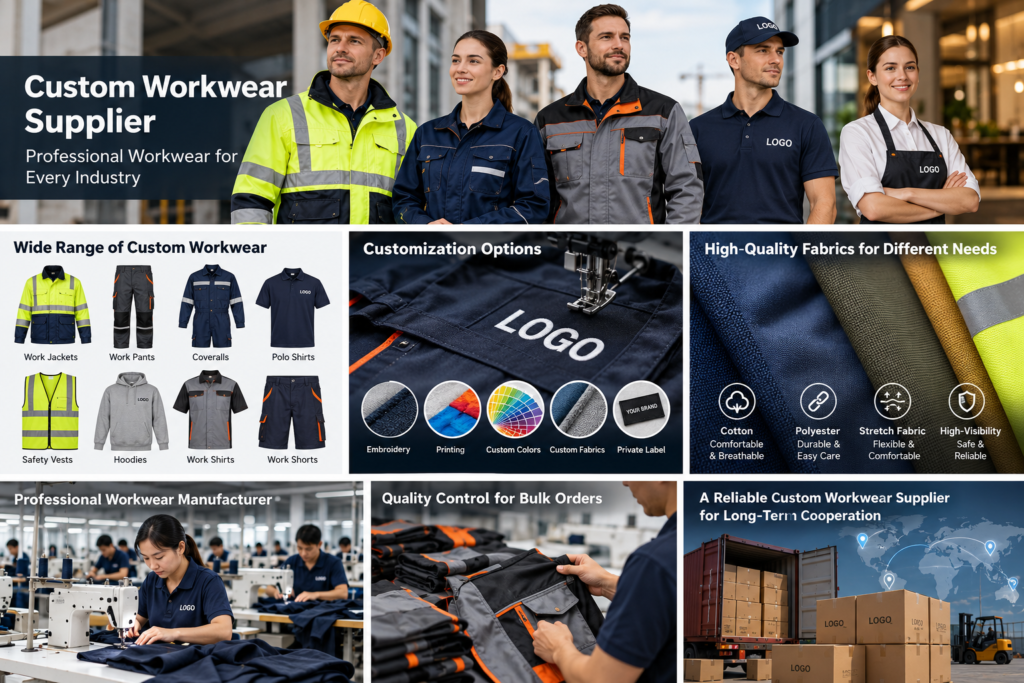
Understanding OEM and ODM Workwear Manufacturing
OEM (Original Equipment Manufacturing) generally refers to manufacturing products according to a buyer’s designs and technical requirements.
ODM (Original Design Manufacturing) involves using or adapting designs developed by the manufacturer, often with modifications requested by the customer.
Both models can help buyers build differentiated workwear product lines.
Common Workwear Customization Options
Depending on production capabilities, customization services may include:
- Fabric composition and weight
- Custom colors and fabric finishes
- Garment construction and pocket configurations
- Size charts and fit adjustments
- Reflective details and functional features
- Embroidery and logo printing
- Private labels, hangtags, and packaging
What Should Buyers Prepare for OEM Workwear Orders?
Before contacting a manufacturer, prepare as much product information as possible:
- Product drawings or reference photographs
- Fabric composition and preferred GSM
- Estimated order quantity
- Required colors and sizes
- Logo and branding specifications
- Target market and delivery schedule
Clear specifications allow the workwear manufacturer to evaluate your requirements and provide a more accurate quotation.
Learn more about TOPRISE’s custom OEM workwear manufacturing services.
3. What Is the Minimum Order Quantity (MOQ)?
Minimum order quantity is a key factor when choosing a wholesale workwear manufacturer.
MOQ requirements vary depending on fabric sourcing, garment complexity, customization, and production arrangements.
For example, an existing workwear style made with standard fabric may require a different minimum quantity from a fully customized jacket using special materials or exclusive colors.
Factors That Affect Workwear MOQ
Fabric Availability
Standard fabrics are often easier to source in smaller quantities. Custom colors, specialized finishes, or nonstandard materials may require higher order volumes.
Diseño de prendas
Complex garments with multiple pockets, reinforced panels, and special construction details can require additional production setup.
Branding and Packaging
Custom embroidery, woven labels, hangtags, and branded packaging may have separate minimum quantity requirements.
Order Structure
The number of styles, colors, and sizes within an order can also influence manufacturing efficiency.
What Is TOPRISE’s Typical Workwear MOQ?
At TOPRISE, the usual minimum order quantity for many workwear products is approximately 500 pieces per style, depending on fabric selection, customization requirements, and product specifications.
The final MOQ should always be confirmed for each individual order.
Buyer’s Tip: When requesting a quotation, clarify whether the MOQ applies per style, color, or total order quantity.
4. What Fabrics Does the Workwear Manufacturer Use?
Fabric selection affects garment comfort, durability, appearance, and suitability for different working environments.
An experienced industrial workwear manufacturer should be able to explain the characteristics of available fabrics and help buyers select materials appropriate for their intended applications.
Common Fabrics Used in Workwear Manufacturing
| Tejido | Main Characteristics | Aplicaciones típicas |
| 100% Algodón | Breathable, comfortable, moisture-absorbing | Industrial uniforms, general workwear |
| Polyester-Cotton | Practical balance of comfort and easy-care properties | Work jackets, trousers, workwear sets |
| Poliéster | Wrinkle-resistant and generally quick-drying | Selected uniforms and outerwear |
| Ripstop Fabric | Designed to help limit the spread of small tears | Utility workwear, outdoor garments |
| Stretch Fabric | Improved flexibility and freedom of movement | Work trousers, active workwear |
Why Is Fabric Weight Important?
Fabric weight is usually measured in GSM (grams per square meter).
For instance, a 200 GSM fabric and a 280 GSM fabric may have different characteristics even when their fiber compositions are similar.
However, heavier fabric does not automatically mean better quality. The most suitable material depends on climate, job requirements, garment construction, and expected working conditions.
What Fabric Information Should Buyers Request?
Before confirming a bulk order, request:
- Exact fabric composition
- Fabric weight in GSM
- Available colors
- Fabric swatches
- Relevant performance test results, where applicable
- Washing and care instructions
Buyer’s Tip: Always evaluate the actual fabric and approved garment sample before proceeding with mass production.
5. How Does the Workwear Manufacturer Ensure Quality Control?
Quality consistency is essential for wholesale workwear orders.
Problems such as incorrect sizing, uneven stitching, color differences, defective zippers, or poor logo placement can result in additional costs and customer complaints.
A reliable workwear manufacturer should have clearly defined inspection procedures throughout production.
Key Stages of Workwear Quality Control
1. Incoming Material Inspection
Check fabrics, zippers, buttons, reflective materials, and other accessories against the approved specifications.
2. Cutting and Sewing Inspection
Monitor cutting accuracy, stitching quality, seam construction, and garment assembly.
3. Measurement Inspection
Compare finished garment measurements against approved size charts and tolerances.
4. Final Product Inspection
Inspect garment appearance, accessories, workmanship, labeling, and packaging before shipment.
5. Pre-Shipment Verification
Confirm finished quantities, agreed inspection requirements, packing details, and shipment documentation.
Why Are Product Standards Important?
For specialized protective clothing, buyers should identify the regulations and standards applicable to their target markets.
For example, high-visibility protective clothing intended for relevant European applications may need to meet EN ISO 20471 requirements.
Similarly, other forms of protective workwear may be subject to different standards depending on the hazards they are designed to address.
Buyers should request appropriate test reports and certification evidence where necessary.
Buyer’s Tip: Ask your workwear supplier about available inspection procedures, product testing, and quality documentation before confirming a bulk purchase.
6. What Are the Sample and Bulk Production Lead Times?
Reliable production scheduling is an important consideration when selecting a workwear manufacturer in China.
Unexpected delays can affect distributor inventory, seasonal sales, uniform replacement schedules, and customer deliveries.
Before placing an order, buyers should request a clear production timeline.
Typical Workwear Manufacturing Process
| Production Stage | Main Activities |
| Inquiry and Quotation | Review specifications, quantities, customization, and pricing |
| Sample Development | Prepare samples according to buyer requirements |
| Sample Approval | Confirm garment design, fit, fabric, colors, and accessories |
| Preparación del material | Arrange fabrics, trims, labels, and packaging |
| Bulk Production | Cutting, sewing, finishing, and production inspection |
| Inspección final | Check garment quality, labeling, and packing |
| Shipping | Prepare documentation and arrange shipment |
How Long Does Workwear Production Usually Take?
According to TOPRISE’s published workwear information, typical lead times may include:
- Sample Development: Approximately 7–10 days
- Bulk Production: Approximately 30–35 days
These figures are indicative rather than guaranteed. Actual timelines depend on product complexity, fabric availability, order quantity, sample approval, and production scheduling.
How Can Buyers Avoid Production Delays?
To improve order efficiency:
- Provide complete product specifications early.
- Approve fabric, colors, and sizing before production.
- Confirm the production schedule in writing.
- Allow sufficient time for inspection and transportation.
- Communicate changes as early as possible.
Buyer’s Tip: Confirm exactly when the quoted production lead time begins, such as after deposit payment, material readiness, or final sample approval.
7. Can the Workwear Manufacturer Support International Bulk Orders?
For international procurement, manufacturing capabilities alone are not enough.
A dependable workwear supplier should also communicate clearly and coordinate packaging, documentation, and shipping arrangements.
Important Questions for International Buyers
Before selecting a manufacturer, consider asking:
- Can you provide detailed quotations with product specifications?
- Do you have experience handling international orders?
- Can you provide custom labels and packaging?
- What shipping terms are available?
- Can you prepare commercial invoices and packing lists?
- How will production progress be communicated?
- What procedures apply if quality problems are identified?
Understanding Common Shipping Terms
International buyers frequently encounter terms such as FOB, CIF, and DDP.
These Incoterms define different responsibilities relating to transportation costs, risks, and delivery obligations.
The appropriate arrangement depends on the buyer’s logistics requirements and the supplier’s available services.
Why Communication Matters
Clear communication helps prevent errors in product specifications, packaging, production schedules, and shipping documents.
Buyer’s Tip: Before paying a deposit, confirm all important commercial terms in writing, including product details, inspection requirements, packaging, delivery terms, and procedures for resolving quality issues.
Why Choose TOPRISE as Your Workwear Manufacturer in China?
Finding the right manufacturing partner requires a balance of product capability, quality control, customization flexibility, and reliable communication.
TOPRISE has been involved in workwear manufacturing and export since 2009, serving international buyers across different industries.
Comprehensive Industrial Workwear Product Range
Our workwear collection includes:
- Industrial work jackets
- Work trousers and utility pants
- Coordinated workwear sets
- Coveralls and overalls
- High-visibility workwear
- Customized industrial uniforms
OEM and ODM Workwear Services
TOPRISE supports customization requirements such as fabric selection, garment specifications, sizing, logo application, private labeling, and packaging.
We work with importers, wholesalers, distributors, and industrial clothing brands to discuss production options for different markets.
Workwear Manufacturing and Quality Control
Our workwear operations involve garment development, fabric selection, production coordination, and quality inspection.
By reviewing buyer specifications and sample requirements before bulk production, we aim to support consistent product quality and reliable order execution.
Request a Wholesale Workwear Quotation
Are you looking for a reliable workwear manufacturer in China for your next bulk order?
Contact TOPRISE with the following information:
- Workwear product type
- Product photographs or technical drawings
- Preferred fabric composition and weight
- Estimated purchase quantity
- Required sizes and colors
- Logo and branding details
- Target delivery schedule
Our team can review your requirements and discuss available manufacturing options, MOQ, samples, and pricing.
Contact TOPRISE for a Workwear Quotation
Frequently Asked Questions About Workwear Manufacturers
What is the difference between a workwear manufacturer and a workwear supplier?
A workwear manufacturer participates directly in producing garments, while a workwear supplier may distribute products manufactured by its own facilities or partner factories. Buyers should verify the company’s actual production capabilities and sourcing arrangements.
Can a workwear manufacturer customize garments with my company logo?
Yes. Many manufacturers offer customization options such as embroidery, printing, woven labels, and branded packaging. Availability depends on the garment design, fabric, and order quantity.
What is the typical MOQ for wholesale workwear?
MOQ depends on the manufacturer, fabric selection, garment design, and customization requirements. Buyers should confirm minimum quantities for each product and color.
How do I verify workwear quality before bulk ordering?
Request representative samples, review fabric specifications, check workmanship and sizing, and agree on inspection procedures before approving mass production.
How long does custom workwear manufacturing take?
Production schedules vary depending on complexity, materials, order quantity, and manufacturing capacity. Sample development and bulk production should be discussed separately with the supplier.
How can I find a reliable workwear manufacturer in China?
Evaluate suppliers based on their relevant product experience, manufacturing capabilities, sample quality, quality control procedures, communication, commercial terms, and export experience.
Conclusion: Choose the Right Workwear Manufacturer for Your Business
Selecting a reliable workwear manufacturer is about more than finding a competitive price.
A suitable manufacturing partner should understand your product requirements, explain available customization options, maintain consistent quality, and provide clear production and delivery information.
By asking these seven essential questions, importers, distributors, and workwear brands can make more informed sourcing decisions and reduce potential risks before placing bulk orders.
Looking for a trusted workwear manufacturing partner? Explore TOPRISE’s industrial workwear collection and contact our team to discuss your next wholesale or OEM project.


 Spanish
 English
 Russian
 Arabic
 Portuguese
 Japanese
 German
 Afrikaans
 Greek
 Italian
 Thai
 French