Choosing the right industrial workwear manufacturer is a critical decision for companies that source durable and functional work clothing. Buyers need products that look professional, support daily movement, and perform well in demanding environments. For importers, wholesalers, distributors, and private-label brands, a reliable workwear factory can make product development easier and reduce sourcing risk.
This guide is written for global B2B buyers sourcing industrial work jackets, work pants, coveralls, and high-visibility clothing for Europe, North America, South America, and Africa. It explains how to evaluate an industrial workwear supplier, how to choose fabrics, and how to prepare for OEM or wholesale workwear orders.
1. Know What an Industrial Workwear Manufacturer Can Produce
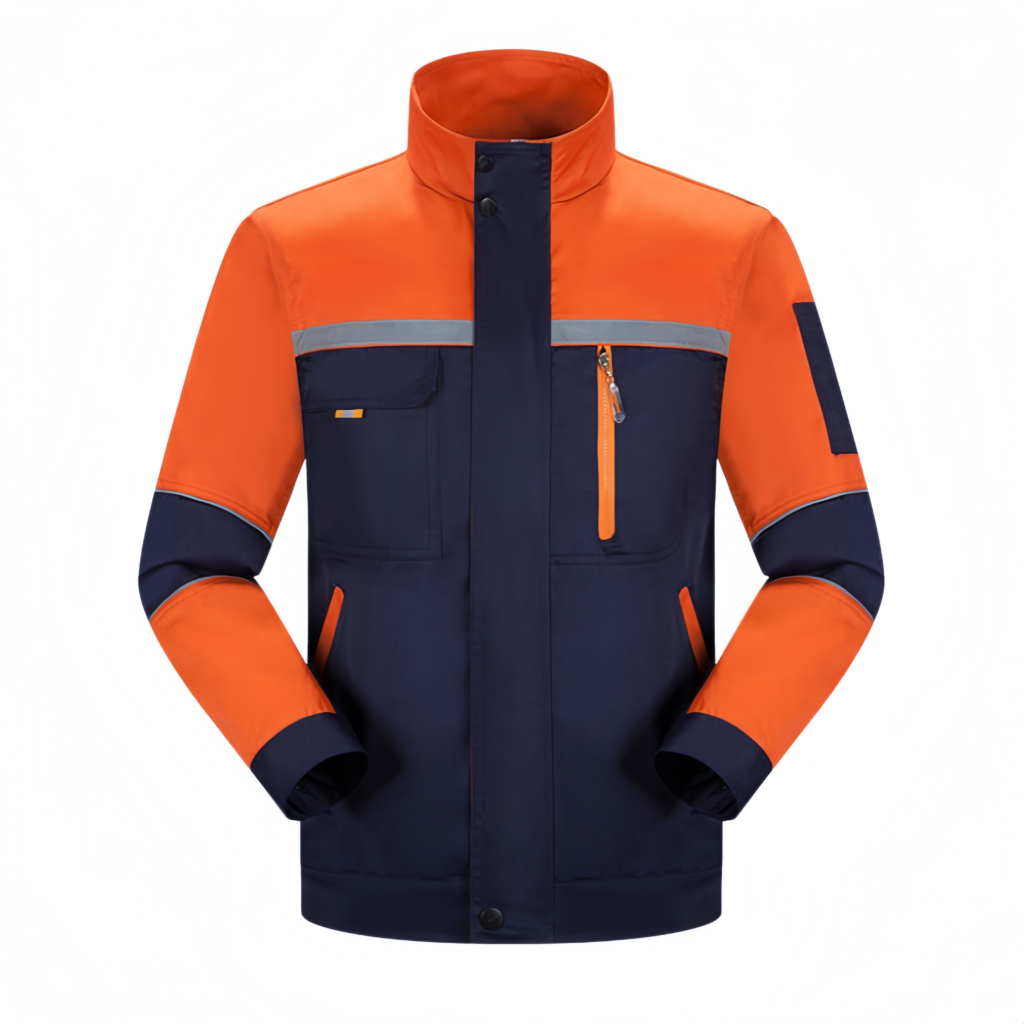
Industrial work jackets
Industrial work jackets are widely used in construction, manufacturing, logistics, engineering, and maintenance. A strong industrial workwear manufacturer should support different jacket styles, fabric weights, colors, pocket layouts, closures, and logo options.
Work pants and cargo trousers
Work pants need stable sizing, strong stitching, and practical pockets. Cargo work trousers, reinforced work pants, and stretch work pants are popular choices for buyers who want both durability and comfort.
Industrial coveralls and boiler suits
Coveralls provide full-body coverage for workshops, factories, maintenance teams, and some industrial operations. When selecting an industrial coveralls manufacturer, buyers should review zipper quality, seam strength, fabric durability, and ease of movement.
High-visibility workwear
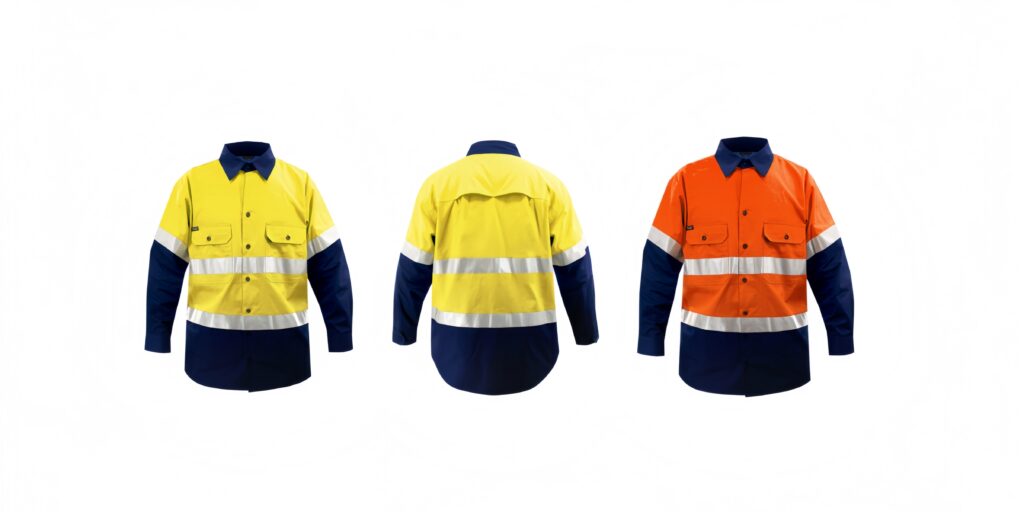
High-visibility workwear includes reflective vests, hi-vis jackets, reflective trousers, and high-visibility coveralls. Reflective details alone do not mean the product is certified PPE. Buyers should confirm the required standard and documentation for the intended market.
Important sourcing note
Do not describe general industrial uniforms as certified protective clothing unless the related testing and certification documents support the claim.
2. Match Industrial Workwear to Your Target Market
أوروبا
European buyers often focus on functional design, consistent measurements, fabric performance, and compliance documents. If a product is sold as protective clothing, the buyer should confirm the applicable EU requirements and test reports.
North America
North American buyers commonly value durable work jackets, practical work pants, company uniforms, and high-visibility garments for relevant applications. The exact standard depends on the product use and destination market.
أمريكا الجنوبية
South American markets may need comfortable workwear for warm climates as well as durable garments for construction, logistics, agriculture, and manufacturing.
أفريقيا
African markets often require practical industrial clothing with good durability, breathable fabrics, simple maintenance, and strong value for money. Product specifications should still be adjusted by country and industry.
3. Choose the Right Fabric Before Bulk Production

Polyester-cotton fabric
Polyester-cotton blends are widely used for industrial jackets, trousers, and coveralls because they can balance comfort, durability, shape retention, and maintenance needs.
Cotton fabric
Cotton is breathable and comfortable. It can be suitable for general-purpose workwear, but ordinary cotton should not be described as flame-resistant or heat-protective unless proper testing supports that claim.
Ripstop and stretch fabrics
Ripstop fabric can help limit tear spread, while stretch fabric improves flexibility. These options are useful when buyers want stronger movement comfort or added durability.
4. Check OEM and Custom Workwear Capabilities
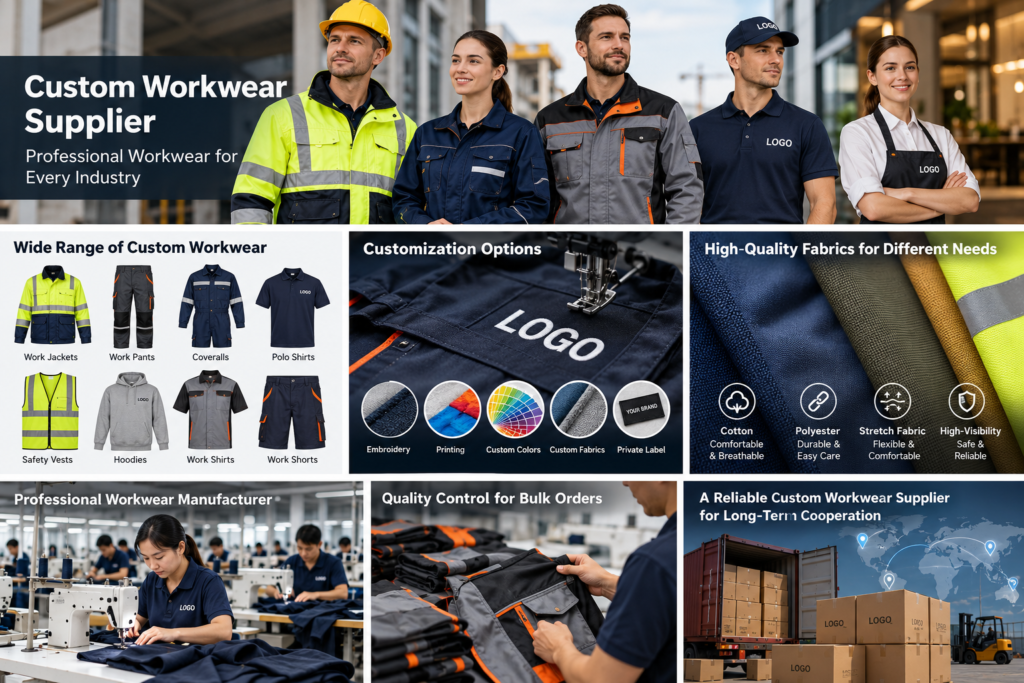
Logo and branding
A capable OEM workwear manufacturer can usually support embroidery, printing, woven labels, care labels, hang tags, and private-label packaging.
Design customization
Buyers may customize colors, pocket positions, reflective tape placement, reinforced panels, size charts, fabric weight, and garment patterns.
Sample approval
Before mass production, buyers should approve physical samples and keep the approved sample as the reference for bulk order inspection.
5. Evaluate Quality Control Like a Professional Buyer
Fabric inspection
Ask the industrial workwear supplier how it checks fabric defects, color consistency, shrinkage, color fastness, and fabric weight.
Workmanship inspection
Check stitching, seam strength, zippers, buttons, pocket construction, bar tacks, size accuracy, and overall finishing.
Final inspection
For wholesale industrial workwear orders, the final inspection should compare bulk goods with approved samples and written specifications.
6. Prepare a Clear Purchasing Brief
Required information
A strong purchasing brief should include product type, target market, fabric composition, fabric weight, colors, size chart, logo placement, packaging, order quantity, and delivery expectations.
Helpful references
Photos, drawings, measurement charts, and existing garment samples help the manufacturer understand the buyer’s expectations more accurately.
Compliance needs
If the workwear requires safety performance, the buyer should identify the required standards before product development begins.
Important sourcing note
Do not describe general industrial uniforms as certified protective clothing unless the related testing and certification documents support the claim.
7. Build a Long-Term Relationship With the Right Factory
Consistency matters
A reliable industrial workwear manufacturer should keep stable patterns, fabrics, measurements, and workmanship across repeat orders.
Communication matters
Good communication helps buyers avoid misunderstanding about materials, samples, delivery time, quality standards, and after-sales handling.
Value matters
The lowest price is not always the best sourcing choice. Durable workwear with stable quality may reduce replacement costs and protect long-term customer trust.
Industrial Workwear Product Options
| Product Category | Common Styles | Key Buyer Concerns | SEO Keyword |
| جاكيتات العمل | Two-tone jackets, lined jackets, lightweight jackets | Fabric weight, pocket layout, logo position | industrial work jacket manufacturer |
| Work Pants | Cargo pants, reinforced pants, stretch trousers | Knee reinforcement, sizing, durability | work pants manufacturer |
| Coveralls | Boiler suits, long-sleeve coveralls, two-tone coveralls | Zipper quality, fit, seam strength | industrial coveralls manufacturer |
| ملابس عالية الوضوح | Safety vests, hi-vis jackets, reflective trousers | Reflective tape, fluorescent fabric, certification | high visibility workwear manufacturer |
Frequently Asked Questions About Industrial Workwear Manufacturers
What does an industrial workwear manufacturer produce?
An industrial workwear manufacturer usually produces work jackets, work pants, coveralls, boiler suits, high-visibility clothing, work shirts, and other occupational uniforms.
Can industrial workwear be customized with company logos?
Yes. Many manufacturers support embroidery, printing, custom labels, care labels, and branded packaging for OEM workwear orders.
Which fabric is best for industrial workwear?
There is no single best fabric for every use. Polyester-cotton, cotton, ripstop, and stretch fabrics serve different work environments and buyer requirements.
How can buyers verify product quality?
Buyers should request samples, review fabric information, check workmanship details, confirm inspection procedures, and verify test reports when protective performance is required.
Can one factory supply Europe, America, South America, and Africa?
Yes, but buyers should adjust sizing, labeling, fabric weight, safety standards, and product design according to each destination market.
Conclusion: Find a Powerful Industrial Workwear Manufacturing Partner
A reliable industrial workwear manufacturer helps global buyers develop durable, practical, and brand-ready workwear products. Whether you need custom work jackets, cargo work pants, industrial coveralls, or high-visibility clothing, the best results come from clear specifications, approved samples, stable quality control, and honest communication.
For buyers serving Europe, North America, South America, and Africa, product development should consider local climate, working conditions, compliance requirements, and customer expectations. A professional custom workwear manufacturer can help turn these requirements into practical products for wholesale and private-label markets.
Looking for custom industrial workwear for your business? Contact us to discuss your product designs, fabric preferences, branding requirements, target market, and expected order quantities. Share your specifications to request a tailored industrial workwear quotation.


 Arabic
  English
  Russian
  Portuguese
  Japanese
  German
  Spanish
  Afrikaans
  Greek
Greek  Italian
  Thai
Thai  French