A жёлтый плащ is more than a simple rainy-day garment. For many buyers, it is a practical workwear product that needs to protect people in wet, muddy, windy and demanding environments. Construction workers, farmers, fishermen, sanitation workers, road crews and outdoor service teams all need rainwear that can be worn repeatedly and cleaned easily after work.
This is why PVC/POLYESTER and PVC/POLYESTER/PVC rainwear remains popular in industrial and outdoor markets. The polyester fabric gives the raincoat strength and structure, while the PVC coating provides waterproof protection and a smooth surface. Compared with thin disposable rainwear, a PVC yellow raincoat is stronger, more professional and better suited for long working hours.
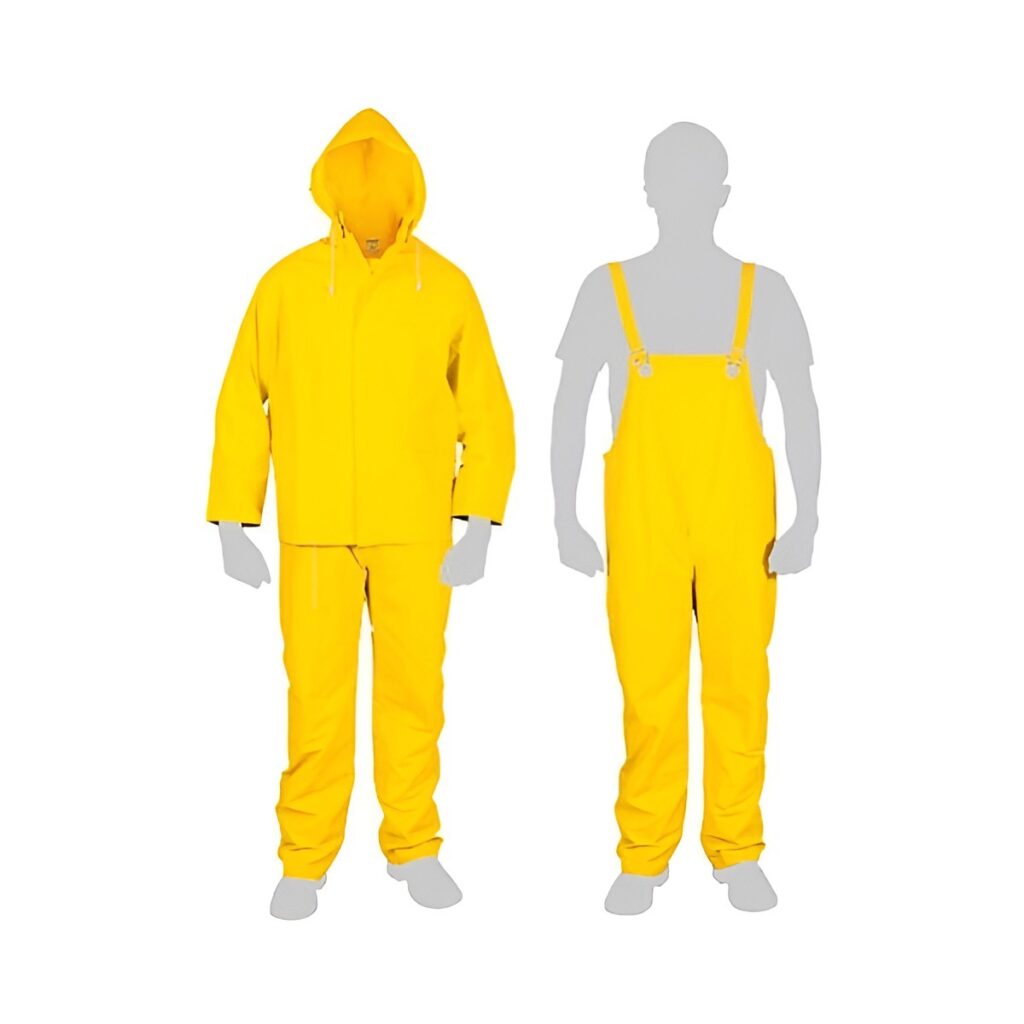
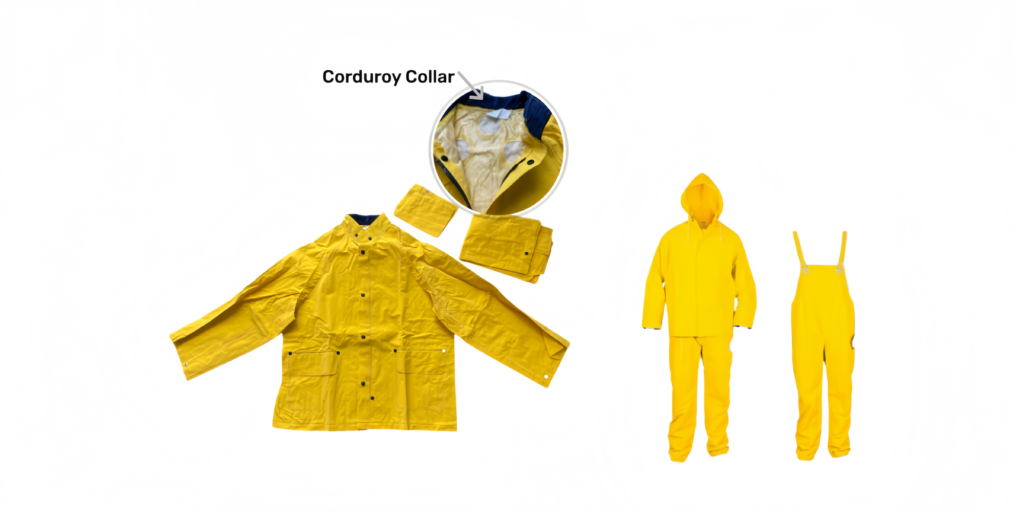
NINGBO TOPRISE supplies yellow PVC/POLYESTER and PVC/POLYESTER/PVC rain suits in common thicknesses such as 0.32mm and 0.35mm. The product normally includes a hooded jacket and bib pants, so buyers may describe it as a yellow raincoat, a yellow rain suit or a waterproof work rain suit. For North American styles, the collar can be made with fleece lining for better comfort. Standard styles without fleece are also available. NINGBO TOPRISE supports small-batch customization, including size, logo and packaging, which is useful for wholesalers, distributors and private-label brands.
1. What Is a PVC/POLYESTER Yellow Raincoat?
A PVC/POLYESTER yellow raincoat is made by applying PVC coating to polyester fabric. Polyester is the base fabric. It gives the garment tear resistance, shape and support. PVC is the waterproof layer. It helps stop rainwater from passing through the fabric and makes the surface easier to wipe clean.
This material structure is widely used in work rainwear because it offers a strong balance between durability, waterproof performance and cost. The raincoat can be used in daily rain, wet job sites and outdoor work environments. It is not as fragile as disposable rainwear, and it is usually more suitable for repeated use.
Thickness matters when buyers compare different yellow raincoat options. A 0.32mm PVC/POLYESTER raincoat is often a good choice for general rain protection and regular workwear. It offers flexibility while still providing reliable waterproof coverage. A 0.35mm yellow rain suit feels heavier and stronger, so it is often selected for tougher working conditions.
PVC/POLYESTER Yellow Raincoat Structure
In a PVC/POLYESTER structure, the polyester fabric is normally coated with PVC to create a waterproof surface. The fabric helps resist tearing, while the coating blocks water. This structure is practical for buyers who want a durable raincoat without making the garment too heavy.
This type of yellow raincoat is suitable for construction supply channels, outdoor workwear brands, farming equipment suppliers and general rainwear distributors. It gives the product a professional feel and helps the end user stay dry during wet work.
PVC/POLYESTER/PVC Yellow Raincoat Structure
A PVC/POLYESTER/PVC yellow raincoat uses polyester fabric between two PVC layers. In simple terms, the structure is PVC outside, polyester in the middle and PVC inside. This design can provide stronger surface protection than a single-coated fabric.
The double PVC layers help improve waterproof protection and make both sides easier to clean. This is useful in messy workplaces where rainwear may contact mud, wet tools, water spray or dirty surfaces. Buyers should also remember that this stronger structure may feel heavier than a single-coated material, so the final choice should depend on the working environment and market positioning.
2. Where Can a Yellow Raincoat Be Used?
A yellow raincoat made with PVC/POLYESTER or PVC/POLYESTER/PVC material can be used in many industries. The bright yellow color is easy to notice in rainy weather, and the waterproof material helps protect workers from water and dirt. This makes the product useful for both retail rainwear and professional workwear channels.
Yellow Raincoat for Construction and Road Work
Construction workers often deal with rain, mud, wet concrete areas and outdoor job sites. A waterproof yellow raincoat helps keep workers dry while making them more visible in poor weather. The hooded jacket protects the upper body, and bib pants can provide better coverage for the waist and legs.
Road maintenance and municipal teams may also choose yellow rainwear because visibility matters in outdoor work. While a standard yellow raincoat is not a substitute for certified high-visibility safety clothing unless it meets relevant standards, the yellow color still gives a clear visual advantage in many rainy work situations.
Yellow Raincoat for Fishing, Farming and Marine Work
Fishing, dock work and marine environments often involve rain, water spray, wet decks and wind. A PVC yellow raincoat is a classic option for these conditions because PVC is waterproof and easy to clean. In colder regions, a fleece collar can make the garment more comfortable around the neck.
Farmers and agricultural workers may face irrigation water, wet soil, animal areas and outdoor washing tasks. A PVC/POLYESTER yellow raincoat can help protect the wearer from water splashes and mud. After work, the smooth PVC surface can usually be wiped or rinsed, which makes it practical for daily use.
Yellow Raincoat for Cleaning, Warehousing and Industrial Work
Cleaning teams, car wash workers, sanitation workers, warehouse staff and industrial service teams may need rainwear that can handle water splashes and damp conditions. A yellow raincoat or yellow rain suit gives simple but effective wet-weather protection.
For industrial buyers, durability and cleaning convenience are important. PVC-coated polyester rainwear can be a good option because the material is stronger than very thin plastic rainwear and easier to maintain than many ordinary textile garments.
3. Key Features of a Waterproof Yellow Raincoat
When customers choose a waterproof yellow raincoat, they usually compare protection, comfort, thickness, durability, cleaning method and customization options. PVC/POLYESTER rainwear performs well in many of these areas, especially for workwear and outdoor use.
Waterproof Protection and Practical Durability
The main purpose of a yellow raincoat is to block rain. PVC coating helps create a waterproof barrier on the polyester base fabric. This allows the garment to protect the wearer from rain, water splashes and wet work environments.
The polyester base fabric improves the strength of the garment. This makes the raincoat more durable than disposable plastic rainwear. For users who need to work outdoors for several hours, durability is a major advantage.
Easy Cleaning for a PVC Yellow Raincoat
A PVC yellow raincoat has a smooth surface. Dirt, mud and water stains can often be wiped off with a damp cloth or rinsed with clean water. This feature is important for farming, fishing, cleaning and construction environments because rainwear may become dirty quickly.
Easy cleaning also helps distributors and workwear buyers position the product as a practical reusable raincoat. Users can wear it repeatedly instead of replacing it after only a few uses.
Mild Acid and Alkali Resistance of PVC Rainwear
PVC material generally has resistance to water, saltwater and many mild acids and mild alkalis. This means a PVC/POLYESTER yellow raincoat can be suitable for some wet industrial, cleaning and outdoor environments where light liquid contact may happen.
However, buyers should not treat a standard PVC raincoat as professional chemical protective clothing by default. If the wearer may contact strong acids, strong alkalis, solvents, oils or hazardous chemicals, the buyer should confirm material compatibility, testing reports and required safety standards before use.
4. Why Yellow Raincoat Styles Are Popular in North America
Yellow raincoat styles are well recognized in North American workwear and outdoor markets. The color looks classic, practical and easy to identify in rainy conditions. For many buyers, yellow also gives the product a professional workwear image.
Another important detail is comfort. PVC rainwear is waterproof and durable, but the material may feel cold around the neck in cool weather. For this reason, some North American styles add fleece lining at the collar. The fleece collar gives a softer touch and can improve comfort during long outdoor work.
Standard yellow raincoat styles without fleece are still useful. They may be better for warm climates, simple industrial supply orders or more price-sensitive markets. NINGBO TOPRISE can support both options based on the customer’s target market.
5. Custom Yellow Raincoat Options from NINGBO TOPRISE
Customization is important for wholesalers, distributors and private-label rainwear brands. NINGBO TOPRISE supports small-batch customization for yellow raincoat and rain suit products. Buyers can discuss size range, logo placement, packaging method, material thickness and style details.
Logo customization helps brands build recognition. Packaging customization helps the product fit retail shelves, online sales, promotional projects or industrial supply channels. Size customization also helps buyers serve different end users, especially when the raincoat is used as workwear for teams or projects.
Common material choices include 0.32mm and 0.35mm PVC/POLYESTER or PVC/POLYESTER/PVC. The best option depends on the target price, expected durability, climate and application field. A lighter raincoat may be easier to move in, while a thicker yellow rain suit may provide stronger protection for demanding work.
6. Customer Questions About Yellow Raincoat Products
Is a PVC yellow raincoat fully waterproof?
A PVC-coated polyester raincoat is designed for waterproof protection in rain and wet work conditions. Waterproof performance also depends on garment design, seams, closures and overall workmanship.
What is the difference between a yellow raincoat and a yellow rain suit?
A yellow raincoat usually refers to the jacket or coat. A yellow rain suit usually includes both a jacket and pants or bib pants. NINGBO TOPRISE can supply the full suit style for better body coverage.
Is 0.32mm or 0.35mm better for a yellow raincoat?
A 0.32mm material is suitable for general use and offers a good balance between flexibility and protection. A 0.35mm material is thicker and may be better for tougher environments.
Can this yellow raincoat resist acid and alkali?
PVC has resistance to many mild acids and mild alkalis, but standard rainwear should not be used as certified chemical protective clothing unless the required tests and standards are confirmed.
Can NINGBO TOPRISE make a custom yellow raincoat with logo?
Yes. NINGBO TOPRISE supports small-batch customization, including logo, size and packaging. This is helpful for private-label brands, wholesalers and project buyers.
Is the fleece collar required for all yellow raincoat orders?
No. The fleece collar is an optional design. It is common for North American styles because it improves neck comfort in cool or windy rain conditions.
Can the product be sold in retail channels?
Yes. With suitable packaging and branding, a PVC/POLYESTER yellow raincoat can be used for retail, wholesale, industrial supply and outdoor workwear markets.
7. Final Buying Advice for Yellow Raincoat Importers
A good yellow raincoat should be waterproof, durable, easy to clean and suitable for the target working environment. Buyers should compare material structure, thickness, style, collar design, size range and customization service before placing an order.
PVC/POLYESTER is a practical structure for many standard workwear markets. PVC/POLYESTER/PVC can be a stronger option for buyers who need more durable protection. Thicknesses such as 0.32mm and 0.35mm give buyers flexibility for different market segments.
NINGBO TOPRISE can support customers who need yellow raincoat or yellow rain suit products with custom size, logo and packaging. Whether the target users are construction workers, farmers, fishermen, municipal crews, cleaning teams or outdoor service workers, a well-designed PVC yellow raincoat can be a powerful and practical rainwear solution.


 Russian
  English
  Arabic
  Portuguese
  Japanese
  German
  Spanish
  Afrikaans
  Greek
Greek  Italian
  Thai
Thai  French