
Choosing the right mining workwear is not simply a matter of selecting a heavy fabric or adding reflective tape. Mining environments may expose workers to abrasive surfaces, moving machinery, dust, heat, rain, chemicals, sparks and poor visibility. A suitable garment must therefore balance protection, durability, mobility and comfort.
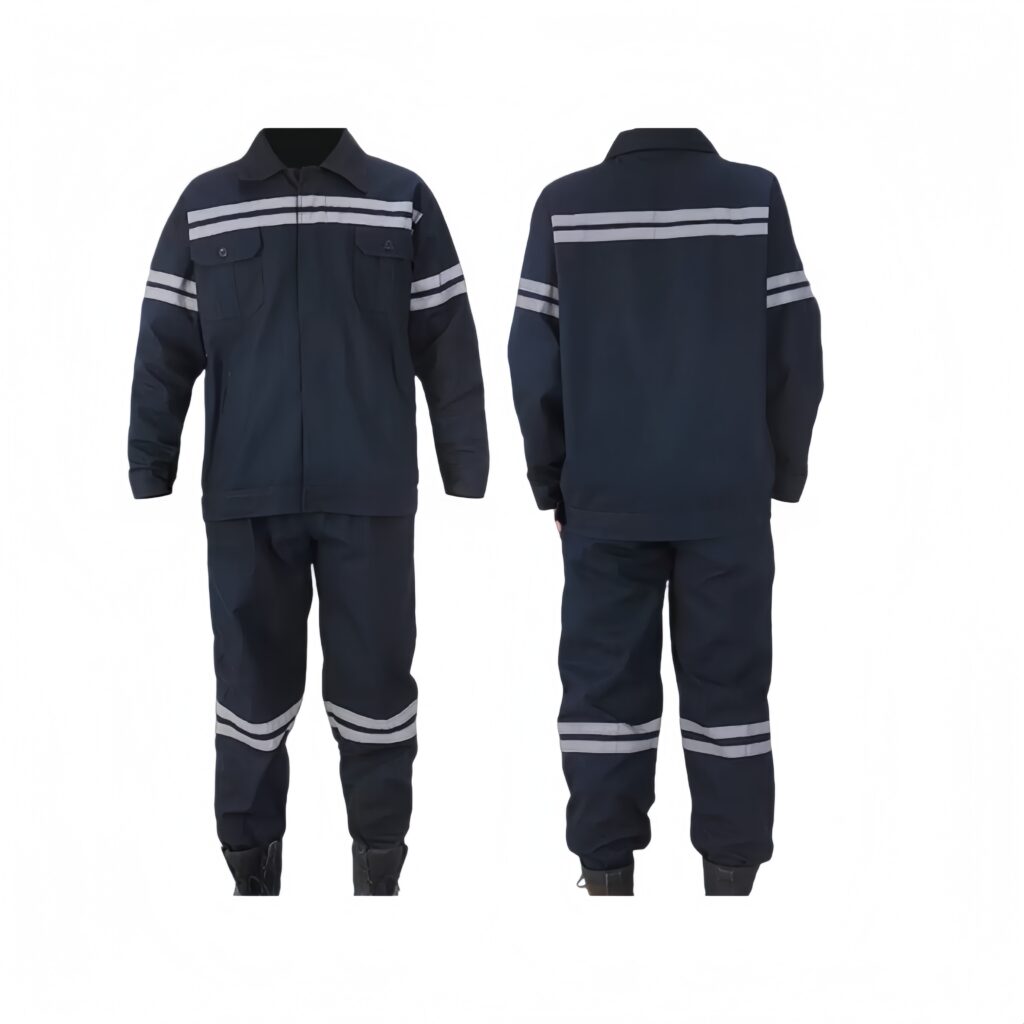
For mining companies, distributors and industrial uniform buyers, the purchasing process should begin with the actual job hazards. Fabric composition, garment style and certification should be selected only after the working conditions are understood.
This guide explains seven practical factors that can help buyers specify mining workwear for underground mines, open-pit operations, drilling sites, processing plants and maintenance teams.
1. Match Mining Workwear to the Actual Job Hazards
The first step is to identify where the clothing will be worn and what the worker will do. Underground extraction, open-pit hauling, equipment repair and chemical processing do not create the same exposure profile.
Before requesting quotations, buyers should review the main risks:
- Flame, heat and sparks
- Electrostatic discharge
- Moving vehicles and heavy equipment
- Sharp rocks and abrasive surfaces
- Mineral dust
- Oil, fuel and chemical splashes
- Rain, wind and low temperatures
- High heat and humidity
- Confined or low-light working areas
A general-purpose mining uniform may be suitable for warehouse staff or low-risk support roles. It should not automatically be specified for welding, electrical maintenance, explosive atmospheres or tasks involving flash-fire hazards.
Why Hazard Assessment Comes Before Fabric Selection
A fabric can be strong without being flame resistant. It can also be breathable without providing chemical protection. Buyers should define the required protective functions before comparing fabric weight, fibre content or price.
When mining workwear is intended to function as personal protective equipment, the complete garment must be considered. The main fabric, sewing thread, zippers, buttons, reflective tape and reinforcement panels can all influence its protective performance.
A clear hazard assessment also helps manufacturers recommend appropriate fabrics and garment structures. Without this information, suppliers may quote products that are durable but unsuitable for the actual working environment.
2. Select Durable Mining Workwear Fabrics
Mining garments are exposed to repeated kneeling, climbing, machine contact, rough materials and industrial laundering. The fabric should provide an appropriate level of abrasion resistance, tear strength and dimensional stability.
Common options include cotton-rich blends, polyester-cotton blends and ripstop constructions. The correct choice depends on climate, washing conditions, expected garment life and protective requirements.
Cotton-Rich Mining Workwear
Cotton-rich fabric is generally comfortable and absorbent. It can help reduce discomfort in hot environments where workers generate significant body heat.
However, ordinary cotton is not the same as certified flame-resistant fabric. Untreated cotton can ignite and continue to burn. Buyers should therefore avoid using fibre content alone as evidence of flame protection.
Cotton-rich blends may be appropriate for general mining uniforms when the workplace does not present significant flame, heat or chemical hazards. Fabric weight and construction should still be selected according to the expected level of abrasion.
Polyester-Cotton Blends
Polyester-cotton blends are widely used because they can combine durability, color retention, shape stability and practical comfort.
A higher polyester content may improve drying speed and abrasion resistance. A higher cotton content may improve moisture absorption and next-to-skin comfort.
The exact blend should reflect the application. Where flame, heat or electrostatic hazards are present, the buyer should request relevant test reports for the specified fabric and finished garment.
A standard polyester-cotton uniform should not be described as flame resistant or antistatic unless the supplier can provide appropriate supporting documentation.
Ripstop Fabric for Heavy-Duty Mining Uniforms
Ripstop fabric contains a reinforced grid designed to restrict the spread of small tears. It is often useful for drilling, exploration, maintenance and other jobs involving frequent contact with rough equipment.
Ripstop construction does not automatically make a fabric suitable for every mining application. Buyers should still assess fabric weight, tear resistance, breathability and required protective properties.
High-wear zones may also require reinforcement at the knees, elbows, shoulders, seat and lower legs.
Reinforcement Materials in Mining Workwear
Reinforcement patches should be compatible with the main garment. Adding an ordinary synthetic patch to a flame-resistant garment may introduce melting or burning risks.
The reinforcement should also remain flexible enough for kneeling, climbing and entering vehicles. Extremely stiff panels may improve abrasion resistance but reduce worker mobility.
Check the Complete Mining Workwear Construction
Buyers should confirm that reinforcement fabric, sewing thread, fasteners, labels and reflective materials are included in the product assessment.
A certificate covering only the main fabric does not necessarily prove that the final garment provides the same level of performance. Any change to trims, fabric weight or garment construction may need additional evaluation.
3. Choose the Required Protective Performance
No single material protects against every mining hazard. Buyers should specify each required function separately rather than requesting a garment that is simply described as “heavy-duty” or “safety rated.”
The required protection may include resistance to flame, heat, static electricity, chemical splashes, wind, rain or low temperatures.
Flame-Resistant Mining Workwear
Flame-resistant clothing may be required for welding, cutting, maintenance, fuel handling and work near heat or open flames.
ISO 11612 specifies performance requirements for protective clothing designed to protect the wearer’s body against heat and flame. The required performance should be selected according to the actual type and level of thermal exposure. ISO 11612 source
Buyers should review the complete garment rather than the outer fabric alone. Non-flame-resistant sewing thread, trims, labels, zippers or reflective tape can affect overall performance.
It is also important to distinguish between flame-resistant clothing and clothing that only offers limited flame-spread performance. The relevant specification should match the identified workplace hazard.
Antistatic Protection
Antistatic garments may be required where electrostatic discharge could contribute to ignition or interfere with operations.
Buyers should request evidence showing whether the test applies only to the fabric or to the complete garment. They should also confirm how the antistatic performance is maintained after washing.
Antistatic clothing is only one element of a broader control system. Appropriate footwear, grounding measures and safe work procedures may also be necessary.
Chemical and Liquid-Splash Protection
Workers handling flotation reagents, fuels, acids, alkalis or cleaning chemicals may require dedicated chemical protective clothing.
A water-resistant mining uniform or rain jacket should not automatically be treated as chemical protection. Garment selection depends on the chemical, its concentration, the exposure route and the expected contact duration.
Buyers should provide the supplier with the names of the relevant substances and the likely exposure conditions. General descriptions such as “chemical resistant” are not sufficiently precise for technical purchasing.
Weather Protection for Open-Pit Operations
Open-pit mines and exploration sites may expose workers to rain, strong wind, intense sunlight and low temperatures.
A layered clothing system is often more practical than one extremely heavy garment. The outer layer can provide weather resistance and visibility, while the inner layers manage moisture and insulation.
Every layer should remain compatible with the required protection. For example, a non-flame-resistant outer jacket may undermine a protective clothing system used in a flame-risk area.
4. Choose the Right Garment Style
The two most common styles are a two-piece jacket-and-trouser set and a one-piece coverall.
The best choice depends on mobility, dust exposure, climate, washing arrangements and the risk of loose clothing contacting machinery.
Two-Piece Jackets and Trousers
A two-piece set is flexible and easy to size. Workers can use different jacket and trouser sizes, replace one damaged item and adjust clothing layers as the weather changes.
This style is commonly suitable for:
- Open-pit mining
- Vehicle operation
- Site inspection
- Warehousing
- General maintenance
- Supervisory work
- Warm climates
The jacket should remain long enough to cover the waist when the worker bends, climbs or raises both arms.
Trousers should stay secure without relying on long exposed drawstrings. Waist adjustment systems should not create loose components that may become caught in machinery.
One-Piece Mining Coveralls
Coveralls provide continuous coverage around the waist and may reduce the entry of dust and debris. They can also reduce the risk of a loose jacket hem becoming caught in equipment.
This style may be suitable for:
- Underground mining
- Drilling
- Equipment repair
- Dusty operations
- Confined spaces
- Work involving frequent crawling or bending
A well-designed coverall needs sufficient room through the shoulders, knees, seat and crotch. It should allow easy entry and removal without creating loose parts that can catch on machinery.
The front closure should also be practical. Covered zippers or snap fasteners can help protect the closure from dust, dirt, sparks and mechanical contact.
5. Balance Fit, Mobility and Comfort
Protective clothing only works as intended when workers wear it correctly.
Poor fit can cause workers to leave zippers open, roll up sleeves or remove the garment during physically demanding tasks. These actions may reduce the intended level of protection.
Clothing that is too tight can restrict movement and overstress seams. Clothing that is too loose can catch on tools, structures or rotating equipment.
Suitable mining workwear should allow workers to:
- Bend and squat naturally
- Climb ladders and steps
- Raise both arms
- Enter and exit vehicles
- Kneel during inspection or repair
- Wear a harness and other protective equipment
- Carry essential tools without excessive bulk
Articulated knees, a gusseted crotch and ergonomic sleeves can improve mobility.
Adjustable cuffs and waist sections may improve fit, provided that they do not create exposed cords or loops.
Comfort Features for Long Shifts
Breathability and moisture management are particularly important in hot underground mines and tropical climates.
At the same time, very lightweight fabric may not withstand abrasive work. The objective is not to select the lightest or heaviest garment. It is to achieve a practical balance between protection, durability and physiological comfort.
Ventilation panels may improve comfort, but their construction must remain compatible with the garment’s protective requirements.
Buyers should also consider whether workers wear base layers, thermal layers, body harnesses or tool belts. These items can affect sizing, ventilation and the visibility of reflective materials.
6. Improve Visibility and Functional Design
Mining sites often contain haul trucks, loaders, excavators and other machines with large blind spots.
Workers may also operate underground, at night or in poor weather. High-visibility clothing can help machine operators and vehicle drivers detect workers more easily.
ISO 20471 specifies requirements for high-visibility clothing designed to signal the wearer’s presence, including visibility during daylight and under vehicle headlights in dark conditions. ISO 20471 source
A small decorative reflective strip does not necessarily make a garment compliant high-visibility clothing. The area, position and continuity of fluorescent and retroreflective materials matter.
High-Visibility Mining Workwear Details
Reflective tape should help equipment operators identify the worker’s body shape.
It should remain visible when the worker wears a harness, tool belt, rain jacket or other equipment. Reflective tape should not be placed only in areas that are likely to be covered during normal work.
The selected tape should also be compatible with the fabric, washing method and any required flame-resistant performance.
Other useful design details include:
- Covered zippers and snap fasteners
- Adjustable but secure cuffs
- Pocket flaps or closures
- Reinforced stress points
- Minimal exposed cords and loops
- Branding that does not obstruct reflective material
- Durable bar-tack reinforcement at high-stress locations
Safer Pocket Design
Pockets should hold essential items without creating excessive bulk.
Open chest or thigh pockets may be unsuitable for welding and cutting because they can collect sparks or hot particles. Covered pockets may be more suitable for dusty environments because they help reduce the entry of debris.
Large cargo pockets can be useful, but they should not interfere with climbing, driving, kneeling or wearing a safety harness.
The number and position of pockets should therefore reflect the worker’s tasks rather than general fashion preferences.
7. Verify Mining Workwear Standards and Supplier Capability
Export buyers should not rely only on marketing descriptions such as “fireproof,” “antistatic,” “high visibility” or “heavy-duty.”
They should request documentation that matches the exact product being purchased.
Useful documents may include:
- Fabric composition and weight
- Weave or ripstop structure
- Size chart and garment measurements
- Shrinkage and colorfastness results
- Abrasion and tear test reports
- Flame-resistant or antistatic reports
- High-visibility certification
- Washing and maintenance instructions
- Product labels and markings
- Certificate scope and validity
- Quality-control procedures
- Inspection records for bulk production
Mining Workwear Compliance for Export Markets
Requirements vary by country and application.
Personal protective equipment placed on the European Union market is governed by Regulation (EU) 2016/425, which establishes requirements relating to the design and manufacture of PPE. EU Regulation 2016/425 source
ISO, EN, NFPA, ASTM, ANSI and AS/NZS documents may address related hazards, but they should not be treated as automatically interchangeable.
Buyers should confirm the applicable regulations, standards and conformity-assessment requirements in the destination market before production begins.
Certificates must also match the ordered garment. A report for one fabric, color, reflective-tape arrangement or accessory configuration may not cover a modified version.
Evaluate the Manufacturer
A capable supplier should be able to explain material options, provide technical documents, prepare samples, maintain production consistency and support inspection before shipment.
The supplier should also be able to identify which product characteristics can be customized without affecting certification.
For large orders, buyers should conduct wearer trials. Workers of different sizes should test the garments while:
- Walking
- Climbing
- Driving
- Squatting
- Kneeling
- Raising their arms
- Carrying tools
- Wearing their normal safety equipment
Wearer feedback can reveal problems that may not be obvious from a flat garment measurement chart.
Purchasing Checklist for Mine-Site Clothing
Before placing an order, provide the manufacturer with the following information:
- The mining activity and job role
- The main workplace hazards
- The climate and season
- The preferred garment style
- The required fabric weight and composition
- The required protective performance
- The applicable safety standards
- The destination country
- The washing method
- The required size range
- The reflective-tape arrangement
- The required pockets and reinforcements
- The company logo and branding method
- The packaging and labeling requirements
A clear technical specification reduces misunderstandings and makes quotations from different suppliers easier to compare.
Buyers should avoid requesting only “standard mine uniforms” without explaining the application. The same product may not be suitable for underground extraction, vehicle operation, welding and chemical processing.
Reflexiones finales
The best mining workwear is not necessarily the heaviest garment or the product with the longest list of features.
It is the garment that matches the identified hazards and provides a workable balance of protection, durability, mobility and comfort.
Buyers should begin with a job-hazard assessment, define the necessary protective performance and then select the fabric, style and functional details. They should also verify that certificates and test reports cover the actual finished product rather than a different fabric or garment configuration.
By providing the supplier with clear information about the working environment, climate, applicable standards, washing process and target market, buyers can obtain mining workwear that is better suited to daily use and bulk procurement.


 Spanish
  English
  Russian
  Arabic
  Portuguese
  Japanese
  German
  Afrikaans
  Greek
Greek  Italian
  Thai
Thai  French