
The main difference in coveralls vs overalls is the upper-body design. Coveralls combine a sleeved top and trousers in one garment. Bib overalls combine trousers with a chest bib and shoulder straps, leaving the arms uncovered by the overall itself. Choosing between them depends on the job, fit, climate and required garment performance.
For workwear buyers, the decision also affects sizing, layering, pocket access and everyday convenience. This guide compares seven practical differences and explains what to check before ordering uniforms for a team.

AI-generated style illustration. Actual garment details and performance vary by model.
What Are Coveralls and Bib Overalls?
Coveralls

Coveralls join the upper and lower sections of a work garment. A typical long-sleeve style has a collar, front closure, sleeves and full-length legs. Short-sleeve versions also exist. Standard coveralls leave the head, hands and feet uncovered; a hood, gloves or footwear are separate features or items.
Bib Overalls
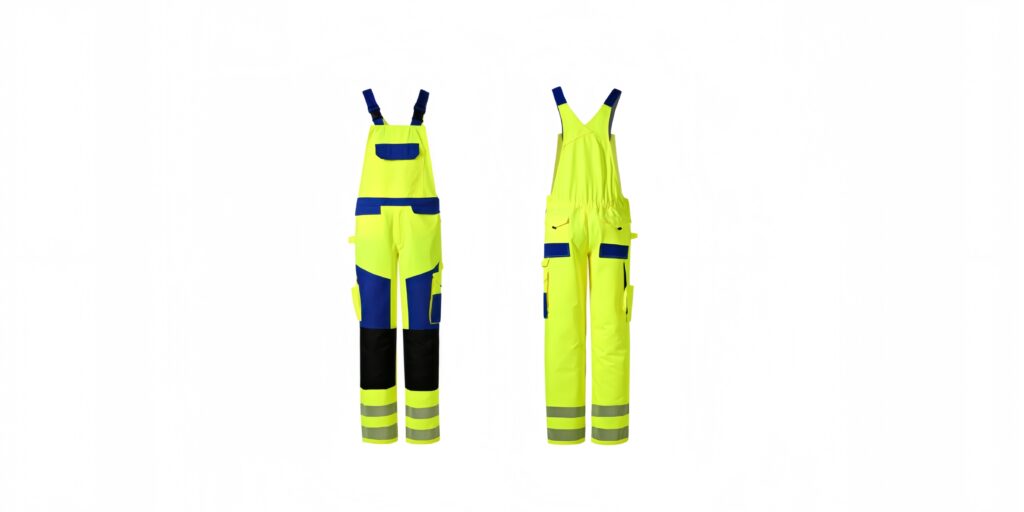
Bib overalls have trouser legs, a front chest panel and shoulder straps. Depending on the design, they may have a rear bib, adjustable buckles and side openings. Workers normally combine them with a separate shirt or other appropriate upper-body clothing. The bib and trousers form one garment, rather than a jacket-and-trouser uniform set.
Why the Names Can Be Confusing
In American English, “overalls” commonly means bib overalls. In British English, “overalls” can also describe the sleeved garment called coveralls or a boiler suit elsewhere. Cambridge Dictionary records both uses. In this guide, “overalls” means bib overalls. For international orders, specify the construction and attach a reference image instead of relying on the product name alone.
Coveralls vs Overalls at a Glance
| Comparison | Typical Long-Sleeve Coveralls | Typical Bib Overalls |
| Upper-body coverage | Torso and arms | Chest bib; arms uncovered by the garment |
| Construction | Integrated sleeved top and trousers | Integrated bib and trousers with shoulder straps |
| Fit considerations | Chest, torso length, sleeves, waist and inseam | Waist, seat, inseam, bib height and strap adjustment |
| Movement | Influenced by sleeve, back and crotch construction | Influenced by seat, crotch, bib and strap construction |
| Layering | Layers fit inside the enclosed upper section | Separate upper-body layers can be changed independently |
| Dressing | Usually a front opening; leg openings vary | Usually shoulder buckles and side openings; designs vary |
| Pocket layout | Chest, hip, leg and sometimes sleeve pockets | Bib, hip, leg and tool pockets, depending on design |
These are typical design features, not protective ratings. Fabric, construction and model-specific specifications still need to be checked.
7 Essential Differences Between Coveralls and Overalls
1. Upper-Body Coverage
Long-sleeve coveralls enclose the torso and arms, creating continuous clothing coverage from the shoulders to the trouser legs. This can be useful when workers want to keep ordinary workshop dirt off the clothing underneath.
Bib overalls cover the legs and part of the torso, while a separate shirt provides arm and shoulder coverage. Their open upper section gives workers more flexibility in choosing that shirt.
For tasks involving contact with dirty surfaces, consider where contact actually occurs. If the forearms and upper body regularly become dirty, a sleeved outer garment may be more practical. Extra coverage alone does not establish chemical, flame or other specialist protection.
2. Construction and Adjustment
Coveralls usually have a front zipper, snaps or buttons. Cuffs, waist adjustments and an elasticated back may help control the fit, depending on the model.
Bib overalls use shoulder straps to support the garment. Adjustable buckles can change where the bib sits, while side closures help with dressing and waist access.
Compare these details on a sample. Check whether buckles hold their setting, closures are comfortable under other equipment, and adjustments stay secure during work. Long adjustment straps should be managed according to the design and workplace requirements. Strap adjustment cannot compensate for an incorrect waist, seat or trouser size.
3. Sizing and Torso Length
Coverall sizing must accommodate both the upper and lower body. A garment can fit correctly at the chest and waist yet feel short when the wearer bends, sits or raises both arms. Torso length and crotch depth therefore deserve particular attention.
Bib overall sizing focuses on the waist, seat, legs and the position of the bib. Adjustable straps offer some control over the bib position, but the garment still needs enough room through the hips and crotch.
Fit Check Before Bulk Production
Test samples over the clothing workers will actually wear. Ask wearers to sit, squat, kneel, reach overhead and climb a step where appropriate. Record pulling, restricted movement, excessive loose fabric and pocket interference. Use garment measurements and a size chart, rather than assuming an “L” fits the same across suppliers.
4. Movement Through the Shoulders and Waist
The absence of attached sleeves can give bib overalls a less enclosed feel around the shoulders. However, the shirt underneath, strap tension and loaded bib pockets still affect comfort.
Well-designed coveralls can also allow substantial movement through features such as an action back, gussets, stretch panels or a suitable cut. Tight sleeves or a short torso can restrict movement even when the fabric feels soft.
For a fair comparison, test both styles during the same tasks. Reaching for a shelf, bending over a workbench and kneeling may reveal different problems. Select the pattern that works for the task instead of assuming one garment category always moves better.
5. Ventilation and Layering
Bib overalls leave the upper arms and shoulders to a separate clothing layer. Workers can change that layer when conditions change, provided workplace clothing requirements are maintained. Coveralls enclose more of the upper body, so the fit and fabric of the complete garment become especially relevant.
The overall style alone does not determine comfort in hot weather. Fabric weight, weave, air permeability, lining, fit, activity and underlayers all matter. A lightweight coverall may feel very different from an insulated one, just as heavy lined bib overalls differ from an unlined pair.
Compare actual fabric swatches and worn samples for the intended conditions. TOPRISE’s coverall fabric guide provides a starting point for discussing material options.
6. Putting On and Taking Off
Coveralls are generally opened at the front before the wearer steps into the legs and puts on the upper section. Bib overalls generally involve stepping into the trousers, closing the sides where applicable and fastening the straps. Exact sequences depend on the design.
For workers who change frequently, check opening length, zipper operation and whether the garment can be removed conveniently with the required footwear. Wide leg openings or leg zippers may help in some models. Neither style is automatically easier for every wearer.
During sampling, time a normal clothing change and check access for breaks. Small closure details can matter more in daily use than a photograph suggests.
7. Pocket Layout and Tool Access
Coveralls may distribute storage across the chest, hips, legs and sleeves. Bib overalls concentrate some upper storage on the bib, with additional pockets on the trousers. Pocket numbers and positions vary substantially between products.
Start with what workers carry. A phone, notebook, ruler and hand tools require different pocket dimensions and closures. Check whether a pocket is reachable while seated and whether its contents press against the body when bending.
A heavily loaded bib pocket can affect strap comfort. A bulky chest pocket on a coverall can also interfere with movement or other equipment. Approve the layout with representative items, rather than choosing the garment with the most pockets.
Which Should You Choose for Your Job?
The coveralls vs overalls decision should follow the work task. The examples below concern garment layout and convenience; specialist hazards require a separate performance specification.
| Working Situation | A Practical Starting Point |
| Workshop maintenance with frequent upper-body contact against dirty surfaces | Try long-sleeve coveralls and check closure coverage and movement. |
| General construction or agricultural tasks needing flexible shirt choices | Try bib overalls and evaluate straps, seat fit and tool access. |
| Warm indoor work | Compare lightweight fabrics and complete clothing combinations in both styles. |
| Cold outdoor work | Compare insulation, weather protection, layering room and adjustment access. |
Choose coveralls when a sleeved outer garment and integrated upper-and-lower fit suit the task. TOPRISE’s work coverall range can help you identify styles to discuss.
Choose bib overalls when you prefer a bib-and-strap design with a separate upper-body layer. Confirm that the selected shirt and outerwear complete the clothing arrangement your workplace needs.
Fabric and Protective Performance Checks
Compare Fabrics Beyond Their Names
Cotton, polycotton, canvas and ripstop descriptions do not provide a complete specification. Cotton and polycotton describe fibre composition; canvas and ripstop describe aspects of fabric construction. A useful comparison includes composition, weight, weave, finish, lining and relevant test results.
Ask for wash-related dimensional change, colourfastness and other performance information relevant to the order. Specify the intended laundering method. A heavier fabric is not automatically the best choice for every task, and matching colour names does not guarantee matching fabric performance.
Confirm Protection for the Actual Garment
Ordinary coveralls and bib overalls are not automatically flame-resistant, arc-rated, chemical-protective or compliant high-visibility garments. Select any required protective clothing against the identified hazards and the requirements of the destination market. OSHA’s PPE guidance emphasises selecting equipment for workplace hazards and achieving an appropriate fit in its applicable scope.
Where specialist protection is required, request documentation for the relevant model, construction and intended use. Confirm the care instructions and limitations. A style name, fabric description or strip of reflective tape is insufficient evidence of the finished garment’s protective performance.
Bulk Order Checklist for Workwear Buyers
Once you have chosen the style, make the specification clear enough for suppliers to quote the same product. Include:
- A reference drawing or sample showing sleeved coveralls or bib overalls.
- Fabric composition, weight, weave, colour and lining requirements.
- A measurement chart, tolerances and the intended underlayers.
- Closures, pocket dimensions, reinforcement and adjustment details.
- Applicable performance requirements and supporting documentation.
- Logo placement, labels, packaging, quantities and the size breakdown.
- Sample approval, inspection and delivery requirements.
Compare quotations on the same specifications and trade terms. Bib overalls are not necessarily cheaper than coveralls: fabric consumption, pocket complexity, hardware, branding and order structure can change the price. Also consider washing, repairs and replacement availability when evaluating the overall purchasing cost.
For repeat orders, retain the approved sample and specification version. This makes it easier to check whether later production matches the fit, materials and construction you agreed.
FAQs About Coveralls vs Overalls
Are Coveralls and Overalls the Same Thing?
Sometimes the names overlap, particularly in British usage. When “overalls” means bib overalls, the main difference is the chest-bib-and-strap design compared with the sleeved upper section of coveralls. Confirm the construction with a picture when ordering internationally.
Which Is Better for Mechanics?
Coveralls can suit mechanics who want a sleeved outer garment for routine workshop dirt. The right choice also depends on reaching, kneeling, pockets and site requirements. Specialist tasks need the appropriate protective garment; the word “coverall” alone does not establish suitability.
Are Bib Overalls Better for Hot Weather?
Their open upper design allows separate shirt choices, but comfort depends on the complete outfit. Compare fabric, lining, fit, ventilation and activity. Lightweight coveralls may also be an option when their coverage and performance suit the work.
Can Coveralls Be Worn Over Other Clothes?
Many coveralls are designed for that use, but sizing should reflect the intended layers. Check the manufacturer’s sizing and use instructions. Evaluate a sample over the actual shirt, trousers or base layers before ordering a size run.
Choose Your Workwear With TOPRISE
For coveralls vs overalls, start with the construction your team needs, then confirm fit, fabric, daily use and any required protective performance.
TOPRISE supports custom OEM workwear development for distributors, importers and private-label buyers, including fabric, design, sizing, logos, labels and packaging options. Send your reference image, quantity, target market and working requirements to discuss samples and a project-specific quotation.


 English
 Russian
 Arabic
 Portuguese
 Japanese
 German
 Spanish
 Afrikaans
 Greek
 Italian
 Thai
 French